Vitality vs WPA Lifestyle Incentives vs Classic Medical Insurance

Choosing the right private medical insurance in the UK can feel overwhelming. At WeCovr, an FCA-authorised broker that has helped arrange over 900,000 policies, we know the choice often boils down to a fundamental question: do you want a plan that rewards your lifestyle, or one that focuses purely on medical cover?
This guide directly compares the three main approaches: Vitality's dynamic, incentive-led model; WPA's community-focused, not-for-profit ethos; and the traditional, comprehensive cover offered by classic insurers like Bupa and Aviva. We'll break down which works best for different professionals and families across the UK.
Which approach works best for UK professionals and families
Deciding between Vitality, WPA, and a classic insurer isn't just about cost; it's about aligning your health insurance with your personal philosophy, lifestyle, and needs. There is no single "best" provider, only the one that is best for you.
Here’s a snapshot of the three distinct models:
- The Incentive Model (Vitality): This approach, pioneered by Vitality, actively rewards you for living a healthy lifestyle. By tracking your activity, you can earn points to reduce your future premiums and unlock a suite of rewards like free coffee, cinema tickets, and discounts on tech. It's an interactive, "gamified" form of insurance.
- The Community & Trust Model (WPA): Western Provident Association (WPA) operates as a not-for-profit organisation. Their focus is on providing straightforward, reliable health insurance with an emphasis on customer service and ethical practices. They offer flexible plans, including unique "shared responsibility" options where you co-pay a percentage of treatment costs.
- The Classic Comprehensive Model (e.g., Bupa, Aviva, AXA Health): This is the traditional private medical insurance you're likely most familiar with. You pay a premium for a pre-defined level of cover. The policy is there when you need it for acute medical conditions, without any requirement to track your activity. It’s a simple, robust, and predictable safety net.
Let's dive deeper into each model to see how they stack up.
Deep Dive: The Vitality Model - Insurance Meets Wellness
Vitality has fundamentally changed the UK private health cover market by integrating wellness rewards directly into its insurance products. Their core premise is that a healthier member is less likely to claim, creating a virtuous circle of lower claims costs and lower premiums.
How Does Vitality's Incentive Programme Work?
The system is built on "Vitality Points." You earn points for engaging in healthy activities, which are tracked via a linked fitness device (like an Apple Watch or Fitbit) or by visiting partner gyms.
- Earning Points: You get points for daily steps, workouts, health checks, and even mindfulness sessions.
- Achieving Status: The more points you earn, the higher your "Vitality Status" climbs—from Bronze, through Silver and Gold, to Platinum.
- Unlocking Rewards: A higher status can lead to significant discounts on your renewal premium (up to 25% for health insurance). You also unlock "Active Rewards" like weekly coffees and cinema tickets simply by hitting weekly activity targets.
Who is the Vitality Model Best For?
This model is a fantastic fit for:
- Active Professionals & Families: If you already go to the gym, track your steps, or enjoy a healthy lifestyle, Vitality pays you for it.
- The Motivated Individual: If you need a nudge to get more active, the tangible rewards—like a heavily discounted Apple Watch—can be powerful motivators.
- Tech-Savvy Users: You need to be comfortable linking apps and devices to make the most of the programme.
Real-Life Scenario: Sarah, a 35-year-old marketing manager in Manchester, runs three times a week and enjoys yoga. By choosing Vitality, her existing activity immediately qualifies her for weekly cinema tickets and a free coffee. She uses the programme to part-fund a new Apple Watch, which helps her track more activity, and by reaching Gold status, she sees a 15% discount on her premium at renewal.
Potential Downsides to Consider
- Engagement is Key: If you don't engage with the programme, you won't earn rewards and may feel you're overpaying for benefits you don't use.
- Complexity: The points and rewards system can feel complicated to new users.
- Rewards Can Change: The specific partner rewards and discounts are subject to change over time.
Understanding WPA: Not-for-Profit Ethos & Flexible Cover
WPA offers a compelling alternative, especially for those who value simplicity, trust, and ethical business practices. As a provident association (a type of not-for-profit), WPA reinvests any surpluses back into the business to benefit its members, rather than paying dividends to shareholders.
What Makes WPA Different?
- Not-for-Profit Status: This underpins their entire philosophy. The focus is on long-term member value and service, not quarterly profits. This can lead to more stable pricing and a strong customer service culture.
- Shared Responsibility: WPA offers an innovative "Flexible Health" policy range where you agree to co-pay a percentage (e.g., 25%) of each claim, up to an annual maximum. This significantly reduces your monthly premium while still providing robust cover for major medical events.
- Unrestricted Consultant Access: Many WPA policies allow you to see any recognised consultant in any recognised private hospital, offering greater freedom of choice compared to some tiered hospital lists from other insurers.
Who is the WPA Model Best For?
WPA's approach resonates strongly with:
- Those Prioritising Simplicity & Trust: If you want excellent cover without the "gamification" of rewards, WPA is a leading choice.
- Cost-Conscious Families and Professionals: The Shared Responsibility model can make comprehensive cover far more affordable.
- People Wanting Choice: The freedom to choose your specialist without being restricted by a narrow network is a significant benefit.
Real-Life Scenario: The Jones family—David, an architect, and his wife and two children—want peace of mind. They aren't interested in tracking their fitness but want a solid policy for unexpected health issues. They opt for a WPA Flexible Health plan with a 25% co-payment. Their premium is around 30% lower than a traditional plan. When their son needs grommets inserted, the procedure costs £2,500. They pay their share of £625, and WPA covers the remaining £1,875. The policy has provided excellent value and kept their monthly outgoings manageable.
Potential Downsides to Consider
- Fewer Lifestyle Perks: You won't find free coffees or discounted gym memberships here. The value is purely in the insurance cover and service.
- Shared Responsibility Risk: If you face a large claim, you are liable for your co-payment share, so you must be comfortable with that financial commitment.
The Classic PMI Approach: Simplicity and Comprehensive Care
This is the bedrock of the UK private medical insurance market, championed by household names like Bupa, Aviva, and AXA Health. The proposition is straightforward: you pay a regular premium in exchange for access to private diagnosis and treatment for eligible acute conditions.
How Does the Classic Model Work?
You build your policy by choosing from a set of core and optional benefits:
- Core Cover: Almost always includes inpatient and day-patient treatment (care requiring a hospital bed). Cancer cover is also typically included as standard or as a mandatory option.
- Optional Add-ons: You can then add extras like:
- Outpatient Cover: For consultations and diagnostics that don't require a hospital bed. This is often limited to a set monetary amount per year (e.g., £1,000).
- Therapies Cover: For physiotherapy, osteopathy, etc.
- Mental Health Cover: Providing access to psychiatrists and therapists.
- Dental and Optical Cover.
Pricing is based on your age, location, chosen excess, and the level of cover you select.
Who is the Classic Model Best For?
The traditional approach is ideal for:
- Those Seeking "Set and Forget" Cover: If you want a policy that simply works in the background without requiring any interaction until you need to claim, this is it.
- Individuals and Families Needing Certainty: The structure is predictable. You know exactly what you are covered for.
- Employers: The simplicity and wide range of providers make this model a popular choice for company health insurance schemes.
Potential Downsides to Consider
- No Rewards for Healthy Living: Your premium is based on demographics and claims history, not your lifestyle choices.
- Can Be Less Flexible: While you can tailor cover, the options are often more structured compared to WPA's co-payment model.
Core Comparison: Vitality vs. WPA vs. Classic PMI
To help you decide, here is a direct comparison of the three approaches. An expert broker at WeCovr can walk you through these options in detail, ensuring you find the perfect fit at no extra cost to you.
| Feature | Vitality | WPA (Western Provident Association) | Classic PMI (e.g., Bupa, Aviva) |
|---|---|---|---|
| Core Philosophy | Shared Value: Reward healthy living to lower claims and premiums. | Not-for-Profit: Member-focused, trust, and service. | Traditional Risk Pooling: A predictable safety net. |
| Pricing Model | Premiums can be reduced by engaging in healthy activity. | Standard premiums, with significant discounts for "Shared Responsibility" (co-payment). | Based on age, location, cover level, and excess. |
| Key Benefit / USP | Extensive wellness programme with tangible rewards (Apple Watch, coffee, cinema). | Ethical not-for-profit status and highly flexible co-payment options. | Simplicity, brand recognition, and a vast range of straightforward cover options. |
| Ideal Customer | Active, tech-savvy individuals and families motivated by rewards. | Those valuing trust, simplicity, and affordable comprehensive cover. | Anyone wanting a simple, "set and forget" policy from a major brand. |
| Potential Downsides | Can be complex; requires active engagement to realise full value. | No lifestyle rewards; co-payment requires financial readiness. | No rewards for a healthy lifestyle; can be more expensive for equivalent cover. |
| Best For... | Getting paid to be healthy. | Affordable access to comprehensive care. | Simplicity and peace of mind. |
Key PMI Concepts You MUST Understand
Before you buy any policy, it's vital to grasp these fundamental concepts. Getting them wrong is one of the most common mistakes we see.
1. The "Big Two" Exclusions: Pre-existing and Chronic Conditions
This is the most important rule in UK private medical insurance. Standard PMI is designed to cover acute conditions that arise after you take out the policy.
- Acute Condition: A disease, illness, or injury that is likely to respond quickly to treatment and lead to a full recovery (e.g., joint replacement, cataract surgery, hernia repair).
- Chronic Condition: A condition that has no known cure and requires ongoing management, such as diabetes, asthma, high blood pressure, or Crohn's disease. PMI does not cover the long-term management of chronic conditions. It may, however, cover acute flare-ups.
- Pre-existing Condition: Any illness or injury for which you have had symptoms, medication, or advice in the years before your policy began. These are typically excluded.
2. Underwriting: How Insurers Assess Your Medical History
This determines how pre-existing conditions are treated. You have two main choices:
- Moratorium (Mori) Underwriting: This is the most common type. You don't declare your full medical history upfront. Instead, the insurer automatically excludes any condition you've had in the 5 years before joining. However, if you then go 2 continuous years on the policy without any symptoms, treatment, or advice for that condition, it may become eligible for cover. It's simple and fast.
- Full Medical Underwriting (FMU): You complete a detailed health questionnaire. The insurer assesses your history and explicitly lists any conditions that will be permanently excluded from cover. This provides certainty from day one but takes longer. It is often the best choice if you have a known historical condition you want clarity on.
3. Excess and Co-payments
This is the amount you agree to pay towards a claim.
- Excess: A fixed amount (e.g., £250) you pay once per policy year, regardless of the claim cost. A higher excess leads to a lower premium.
- Co-payment (or Shared Responsibility): You pay a percentage of the claim cost (e.g., WPA's 25% model).
Common Mistakes When Choosing Your Health Insurance
As expert PMI brokers, we see the same costly errors time and again. Avoid them by being aware.
- Focusing Only on the Cheapest Premium: The cheapest policy often has the most restrictions, such as a very limited hospital list or no outpatient cover. Value is more important than price.
- Ignoring the Hospital List: Insurers offer different tiers of hospitals. Ensure the hospitals and treatment centres near you are on your chosen list before you buy.
- Misunderstanding Underwriting: Choosing moratorium when you need the certainty of FMU (or vice versa) can lead to rejected claims and immense frustration.
- Being Dazzled by Rewards You Won't Use: A discounted coffee is great, but it's worthless if the underlying medical cover isn't right for your needs.
- Not Using an Independent Broker: The market is complex. A broker like WeCovr compares all the leading insurers for you, explains the crucial differences, and provides expert advice at no cost to you. Our fee is paid by the insurer you choose, so you get our expertise for free.
How WeCovr Helps You Navigate the Maze
Choosing the right private medical insurance is a significant financial decision. You don't have to do it alone. As a fully independent and FCA-authorised broker, WeCovr works for you, not the insurance companies.
Our service provides:
- Whole-of-Market Comparison: We compare policies from Vitality, WPA, Aviva, Bupa, AXA, and more, giving you a complete view of your options.
- Expert, Unbiased Advice: We listen to your needs—whether you're an active professional, a growing family, or a business owner—and recommend the policy that offers the best value and protection for your specific circumstances.
- Clarity on the Small Print: We'll explain underwriting, hospital lists, and excess options in Plain English, so you can buy with confidence.
- No Fees for Our Service: You get our expert guidance and support completely free of charge.
- Exclusive Benefits: WeCovr clients get complimentary access to our AI-powered nutrition app, CalorieHero, to support their health goals. Plus, you can unlock discounts on other policies like life insurance when you take out PMI with us.
Does UK private medical insurance cover cancer?
Is it worth getting private health insurance in the UK?
Can I switch my health insurance provider easily?
Find Your Perfect Health Insurance Match Today
The debate between Vitality's rewards, WPA's trust-based model, and classic comprehensive cover comes down to a personal choice. Your lifestyle, budget, and what you value most—be it engagement, simplicity, or affordability—will determine the right path.
The best way to make a confident decision is with expert, impartial advice.
Contact a WeCovr adviser today for a free, no-obligation quote. We'll compare the entire market and help you find the ideal private health cover for you and your family.
Related guides




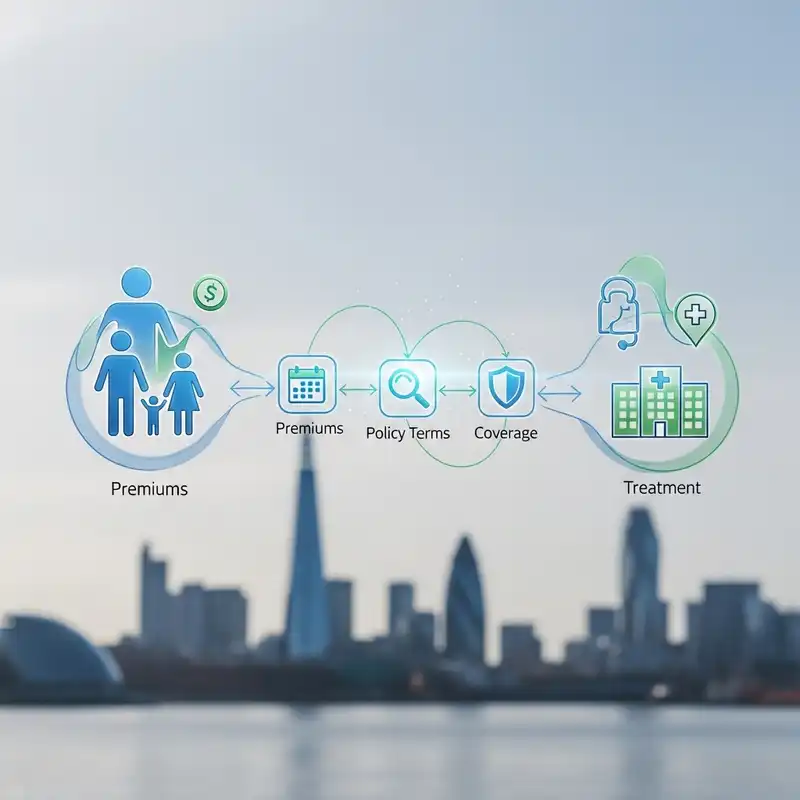

Why private medical insurance and how does it work?
What is Private Medical Insurance?
Private medical insurance (PMI) is a type of health insurance that provides access to private healthcare services in the UK. It covers the cost of private medical treatment, allowing you to bypass NHS waiting lists and receive faster, more convenient care.How does it work?
Private medical insurance works by paying for your private healthcare costs. When you need treatment, you can choose to go private and your insurance will cover the costs, subject to your policy terms and conditions. This can include:• Private consultations with specialists
• Private hospital treatment and surgery
• Diagnostic tests and scans
• Physiotherapy and rehabilitation
• Mental health treatment
Your premium depends on factors like your age, health, occupation, and the level of cover you choose. Most policies offer different levels of cover, from basic to comprehensive, allowing you to tailor the policy to your needs and budget.
Questions to ask yourself regarding private medical insurance
Just ask yourself:👉 Are you concerned about NHS waiting times for treatment?
👉 Would you prefer to choose your own consultant and hospital?
👉 Do you want faster access to diagnostic tests and scans?
👉 Would you like private hospital accommodation and better food?
👉 Do you want to avoid the stress of NHS waiting lists?
Many people don't realise that private medical insurance is more affordable than they think, especially when you consider the value of faster treatment and better facilities. A great insurance policy can provide peace of mind and ensure you receive the care you need when you need it.
Benefits offered by private medical insurance
Private medical insurance provides numerous benefits that can significantly improve your healthcare experience and outcomes:Faster Access to Treatment
One of the biggest advantages is avoiding NHS waiting lists. While the NHS provides excellent care, waiting times can be lengthy. With private medical insurance, you can often receive treatment within days or weeks rather than months.
Choice of Consultant and Hospital
You can choose your preferred consultant and hospital, giving you more control over your healthcare journey. This is particularly important for complex treatments where you want a specific specialist.
Better Facilities and Accommodation
Private hospitals typically offer superior facilities, including private rooms, better food, and more comfortable surroundings. This can make your recovery more pleasant and potentially faster.
Advanced Treatments
Private medical insurance often covers treatments and medications not available on the NHS, giving you access to the latest medical advances and technologies.
Mental Health Support
Many policies include comprehensive mental health coverage, providing faster access to therapy and psychiatric care when needed.
Tax Benefits for Business Owners
If you're self-employed or a business owner, private medical insurance premiums can be tax-deductible, making it a cost-effective way to protect your health and your business.
Peace of Mind
Knowing you have access to private healthcare when you need it provides invaluable peace of mind, especially for those with ongoing health conditions or concerns about NHS capacity.
Private medical insurance is particularly valuable for those who want to take control of their healthcare journey and ensure they receive the best possible treatment when they need it most.
Important Fact!
We can look at a more suitable option mid-term!
Why is it important to get private medical insurance early?
👉 Many people are very thankful that they had their private medical insurance cover in place before running into some serious health issues. Private medical insurance is as important as life insurance for protecting your family's finances.👉 We insure our cars, houses, and even our phones! Yet our health is the most precious thing we have.
Easily one of the most important insurance purchases an individual or family can make in their lifetime, the decision to buy private medical insurance can be made much simpler with the help of FCA-authorised advisers. They are the specialists who do the searching and analysis helping people choose between various types of private medical insurance policies available in the market, including different levels of cover and policy types most suitable to the client's individual circumstances.
It certainly won't do any harm if you speak with one of our experienced insurance experts who are passionate about advising people on financial matters related to private medical insurance and are keen to provide you with a free consultation.
You can discuss with them in detail what affordable private medical insurance plan for the necessary peace of mind they would recommend! WeCovr works with some of the best advisers in the market.
By tapping the button below, you can book a free call with them in less than 30 seconds right now:
Our Group Is Proud To Have Issued 900,000+ Policies!
We've established collaboration agreements with leading insurance groups to create tailored coverage




















How It Works
1. Complete a brief form

2. Our experts analyse your information and find you best quotes

3. Enjoy your protection!

Any questions?
Learn more

Who Are WeCovr?
WeCovr is an insurance specialist for people valuing their peace of mind and a great service.👍 WeCovr will help you get your private medical insurance, life insurance, critical illness insurance and others in no time thanks to our wonderful super-friendly experts ready to assist you every step of the way.
Just a quick and simple form and an easy conversation with one of our experts and your valuable insurance policy is in place for that needed peace of mind!