Login

UK's Sick Leave Shock Approaching 3 Million Britons Out of Work

UK's Sick Leave Shock Approaching 3 Million Britons Out of...

New Data Reveals a Staggering £3 Trillion Collective Economic Inactivity Crisis by 2025, Fueling Individual £1 Million+ Lifetime Income Loss & Family Ruin – Is Your LCIIP Shield Your Unseen Financial Lifeline?

A silent crisis is tightening its grip on the United Kingdom. It doesn’t arrive with a sudden crash like a stock market correction, but with a slow, creeping dread that is dismantling the financial security of millions. New analysis projects a shocking milestone: by 2025, the number of Britons out of work due to long-term sickness is set to surge towards 3 million.

This isn't just a headline statistic; it's a personal and national catastrophe in the making. This wave of economic inactivity is forecast to create a £3 trillion black hole in our collective economic output. More devastatingly, for each individual forced out of the workforce, it represents a potential lifetime income loss exceeding £1 million, pushing families towards financial ruin.

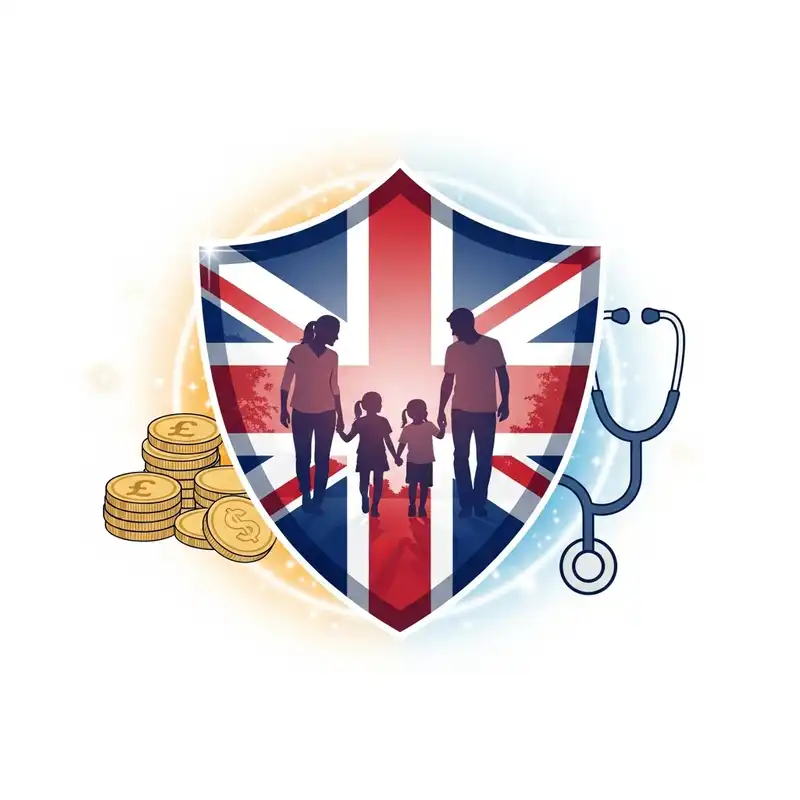
The traditional safety nets are threadbare. The support offered by the state is a fraction of what’s needed to maintain a mortgage, pay the bills, and sustain a family. In this new reality, the question is no longer if you need a backup plan, but what that plan looks like. The answer may lie in an acronym you're not yet familiar with, but one that could become the most important in your financial vocabulary: LCIIP – Life, Critical Illness, and Income Protection insurance. This is your personal financial shield, the unseen lifeline in an increasingly uncertain world.

The Alarming Surge: Unpacking the UK's Long-Term Sickness Epidemic

The scale of the UK's health-related worklessness problem has reached unprecedented levels. Data from the Office for National Statistics (ONS) paints a stark picture of a workforce under immense strain. The post-pandemic landscape has accelerated trends that were already simmering beneath the surface.

Let's look at the numbers. In mid-2019, before the world had heard of COVID-19, around 2 million people were economically inactive due to long-term sickness. By early 2024, that figure had already climbed to a record 2.8 million. Projections based on current trajectories suggest this could approach 2.95 million by mid-2025.

UK Economic Inactivity Due to Long-Term Sickness (2019-2025)

YearNumber of People (approx.)Key Context
20192.0 millionPre-pandemic baseline
20222.5 millionPost-pandemic surge, long-COVID emerges
20242.8 millionRecord high, mental health a primary driver
2025 (proj.)2.95 millionContinued strain on NHS, ageing workforce

Source: Analysis based on ONS Labour Force Survey trends.

But what is driving this alarming increase? It's a complex combination of factors:

  • Mental Health Crisis: Conditions like depression, stress, and anxiety are now a leading cause of long-term absence. The pressures of modern life, job insecurity, and the psychological fallout from the pandemic have created a perfect storm.
  • Musculoskeletal (MSK) Issues: Back pain, neck problems, and arthritis remain a major driver. A combination of sedentary desk jobs, poor home-working ergonomics, and an ageing population means more people are living with chronic pain that makes work impossible.
  • Post-COVID Complications: "Long COVID" has emerged as a significant new factor, leaving hundreds of thousands of people with debilitating long-term symptoms such as fatigue, respiratory issues, and "brain fog."
  • NHS Waiting Lists: Record-breaking waits for consultations, diagnostics, and treatments mean conditions that might have been managed or resolved quickly are now escalating into chronic, work-limiting problems. People are waiting longer in pain and uncertainty, unable to get the help they need to return to work.
  • An Ageing Workforce: More people are working later in life, increasing the statistical likelihood of developing age-related health conditions while still employed.

This isn't a problem confined to one demographic. While the increase is most pronounced in the 50-64 age group, significant rises are being seen across all working ages, including those in their 20s and 30s. It’s a national issue that cuts across every industry and region.

The £3 Trillion Black Hole & The £1 Million Personal Catastrophe

The national cost of this crisis is staggering. A £3 trillion figure represents the projected cumulative loss of economic output over the working lives of those currently inactive due to sickness. It's a loss of productivity, tax revenue, and consumer spending that impacts everyone.

But for you, the national figure is academic. The personal cost is what truly matters. For an individual forced to give up work prematurely, the financial consequences are catastrophic. We're not talking about a few thousand pounds; we're talking about the complete erosion of your financial future.

Let’s calculate the potential Lifetime Income Loss.

Consider David, a 40-year-old project manager earning a typical UK salary of £45,000 per year. He has a mortgage, two children, and plans to work until the state pension age of 67. A sudden, severe back injury forces him out of work permanently.

  • Years of lost work: 27 (from age 40 to 67)
  • Annual salary: £45,000
  • Total Lost Gross Income: 27 x £45,000 = £1,215,000

David is facing a £1.2 million income black hole. This doesn't even account for potential pay rises, bonuses, or the devastating loss of pension contributions, which would have compounded over those 27 years.

This isn't an extreme example. The table below illustrates how quickly the losses accumulate across different ages and income levels.

Potential Lifetime Income Loss by Age and Salary

Starting AgeAnnual SalaryYears to Retirement (67)Total Lost Income (Gross)
35£35,00032£1,120,000
40£45,00027£1,215,000
45£60,00022£1,320,000
50£50,00017£850,000

This financial shockwave triggers a devastating domino effect:

  1. Losing the Family Home: The mortgage becomes unpayable.
  2. Debt Spiral: Credit cards and loans are used to cover daily expenses.
  3. Pension Pot Obliterated: Contributions stop, and existing savings may be drained to survive.
  4. Children's Futures Compromised: University funds, driving lessons, and future deposits disappear.
  5. Relationship Strain: Financial stress is a leading cause of family breakdown.

This is the reality of financial ruin that millions are unknowingly exposed to. The belief that "it won't happen to me" is a gamble against overwhelming odds.

The State Safety Net: A Patchwork Quilt with Gaping Holes

"But surely the government will support me?" It's a common and understandable belief. Unfortunately, the reality of the UK's state welfare system is a brutal shock for those who suddenly need it. It is not designed to replace your income; it is designed to provide a subsistence-level existence.

Let’s break down what is actually available.

Statutory Sick Pay (SSP)

If you are employed and become too ill to work, your employer is required to pay you SSP.

  • Amount (2025 proj.): Around £118 per week.
  • Duration: For a maximum of 28 weeks.

For someone earning £45,000 a year (£865 per week gross), this represents an immediate 86% pay cut. It’s a temporary stop-gap, not a solution. After 28 weeks, it stops completely.

Employment and Support Allowance (ESA) & Universal Credit (UC)

Once SSP ends, you must navigate the complex world of state benefits. You will likely apply for the 'new style' ESA or the health-related element of Universal Credit.

  • Assessment Rate: While you're being assessed (which can take months), you might get around £90.50 per week.
  • Post-Assessment (if successful): If the Department for Work and Pensions (DWP) agrees you are unable to work, your total benefit could rise to a maximum of around £139 per week (for the Limited Capability for Work and Work-Related Activity group).
Get Tailored Quote

Let's compare this to an average salary.

Monthly Income vs. State Support (Example)

Income SourceApproximate Monthly Amount% of Original Salary
Average UK Salary (£35k)£2,917 (gross)100%
Statutory Sick Pay (SSP)£511 (approx.)17%
Max ESA / UC Support£602 (approx.)20%

The conclusion is stark and unavoidable: the state safety net will not save your lifestyle. It will not pay your mortgage, cover your car finance, or fund your family's future. It leaves an income gap of 80% or more, a chasm that can only be bridged by personal savings (which are quickly exhausted) or a robust private insurance plan.

Your LCIIP Shield: Building a Personal Financial Fortress

Relying on luck or the state is not a strategy. The only way to guarantee your financial security is to build your own fortress. This is where the LCIIP Shield comes in: a powerful, multi-layered defence strategy comprising three core types of insurance.

  1. Income Protection (IP): The cornerstone for protecting your earnings.
  2. Critical Illness Cover (CIC): A lump sum to fight serious illness.
  3. Life Insurance (LI): The ultimate protection for your loved ones.

Let's examine each layer of the shield.

1. Income Protection (IP): Your Personal Salary, Guaranteed

Often described by financial experts as the most important insurance you can own, Income Protection is designed to do one thing: replace your salary if you are too ill or injured to work.

It pays a regular, tax-free monthly income until you can return to work, or until the policy ends (typically at your retirement age). It covers you for almost any illness or injury that prevents you from doing your job, from stress and back pain to cancer and heart disease.

Key Features Explained:

  • Benefit Amount: You can typically insure up to 50-70% of your gross annual salary. This is paid tax-free, so it's often close to your normal take-home pay.
  • Deferred Period: This is the waiting period before the payments start. You can choose a period that matches your employer's sick pay scheme or your savings, for example, 4, 8, 13, 26, or 52 weeks. A longer deferred period makes the policy cheaper.
  • Payment Term: You can choose a short-term plan (e.g., 1, 2, or 5 years of payment per claim) or a full-term plan that pays out right up until your chosen retirement age (e.g., 67). The latter provides the ultimate peace of mind.

Think of it as your own private, legally-binding sick pay scheme that never runs out. It's the policy that protects you, the living, and your ability to earn.

2. Critical Illness Cover (CIC): A Financial War Chest for a Health Crisis

While Income Protection replaces your monthly income, Critical Illness Cover provides a different kind of support. It pays out a single, tax-free lump sum on the diagnosis of a specific, serious medical condition defined in the policy.

The "big three" conditions that make up the majority of claims are cancer, heart attack, and stroke, but modern policies can cover over 50 specified conditions, including multiple sclerosis, major organ transplant, and Parkinson's disease.

How a CIC Lump Sum Can Be Used:

  • Clear your mortgage and other major debts instantly.
  • Pay for specialist private medical treatment or consultations, bypassing NHS queues.
  • Fund home modifications (e.g., wheelchair access).
  • Replace a partner's income if they need to take time off to care for you.
  • Provide a financial cushion to allow you to reduce work hours or change to a less stressful career after recovery.

It gives you financial options and breathing space at the most difficult time imaginable, allowing you to focus 100% on your recovery.

3. Life Insurance: The Foundational Protection for Your Family

Life Insurance is the most well-known type of protection. Its purpose is simple but profound: to pay out a lump sum to your chosen beneficiaries if you pass away during the policy term.

This money provides an immediate financial lifeline for your family, ensuring they are not left with a legacy of debt and financial hardship.

Key Uses for a Life Insurance Payout:

  • Pay off the mortgage, ensuring your family keeps their home.
  • Cover funeral expenses.
  • Replace your lost income for a number of years.
  • Provide a fund for your children's education and future.
  • Clear any outstanding loans or credit card debts.

It is the ultimate expression of care, providing security for your loved ones after you're gone.

Summary: The Three Layers of Your LCIIP Shield

Insurance TypeWhat it DoesPayout TypePrimary Purpose
Income ProtectionReplaces your salary if you can't workRegular Monthly IncomeProtects your lifestyle & bills
Critical Illness CoverPays out on diagnosis of serious illnessTax-Free Lump SumClears debt & funds recovery
Life InsurancePays out on deathTax-Free Lump SumProtects your family's future

These three policies work together to create a comprehensive shield. A specialist broker, like us at WeCovr, can help you blend these covers into a single, affordable plan that is perfectly tailored to your personal circumstances and budget.

Demystifying the Costs: Is Financial Security Affordable?

A common barrier to taking out protection is the perception of cost. Many people overestimate the price of insurance by 300% or more. The truth is, for the price of a few coffees a week or a monthly streaming subscription, you can secure a substantial financial safety net.

The cost (the 'premium') depends on several factors:

  • Your age: The younger you are, the cheaper it is.
  • Your health and lifestyle: Non-smokers with a clean bill of health pay less.
  • Your occupation: An office worker will pay less than a manual labourer.
  • The amount of cover: How much you want to be paid out.
  • The term of the policy: How long you want the cover for.
  • The deferred period (for IP): A longer wait means a lower premium.

Let's look at some real-world examples to show just how affordable it can be.

Sample Monthly Premiums (Illustrative)

ScenarioPolicy TypeCover DetailsEstimated Monthly Premium
30-year-old, non-smoker, office jobIncome Protection£2,000/month benefit, 13-week deferral, pays to age 67£25 - £40
35-year-old couple, non-smokersJoint Life & Critical Illness£250,000 cover, 25-year term (to cover mortgage)£50 - £75
40-year-old, non-smoker, teacherLife Insurance£300,000 level cover, 25-year term£20 - £35

Premiums are for illustration only and will vary based on individual circumstances and insurer. Based on 2025 market rates.

The key is not to guess, but to get a clear picture. By speaking with an expert adviser, you can adjust the different levers—cover amount, term, deferred period—to design a plan that provides meaningful protection within your budget.

The Hidden Drivers: Why Mental Health & MSK Are Ticking Time Bombs

To truly understand your risk, it’s vital to look beyond the headline-grabbing conditions like cancer and heart attacks. The two biggest causes of long-term work absence in the UK are far more common and insidious.

The Mental Health Epidemic

The ONS reports that "depression, bad nerves or anxiety" is now one of the fastest-growing reasons for long-term sickness. The modern workplace, with its 'always-on' culture, performance pressures, and increasing uncertainty, is a breeding ground for stress and burnout.

Historically, insurance policies were less robust in this area. However, the market has evolved significantly. Modern Income Protection policies now have a much more sophisticated understanding of mental health. The best insurers not only pay claims for conditions like stress and depression but also provide valuable, early-intervention support services, such as:

  • Access to remote GPs and mental health specialists.
  • Confidential counselling and therapy sessions (e.g., CBT).
  • Structured return-to-work support programmes.

This proactive support can often help you get back on your feet faster, which is a better outcome for everyone.

The Musculoskeletal (MSK) Crisis

Back pain, neck strain, arthritis, and repetitive strain injury (RSI) are the silent scourges of the modern workforce. The shift to hybrid and remote working has often resulted in poor ergonomic setups, with people working for hours from sofas or dining tables.

These conditions are rarely life-threatening, but they can be completely debilitating, making it impossible to commute, sit at a desk, or perform physical tasks. They are a classic example of a condition that would trigger a long-term Income Protection claim, providing the financial support needed while you undergo physiotherapy and rehabilitation.

At WeCovr, we understand the underwriting nuances for both mental health and MSK conditions. We know which insurers take a more progressive view and can help you find a policy that provides robust cover, even if you have a pre-existing condition.

Case Study: The Tale of Two Colleagues – Protected vs. Unprotected

To see the profound difference protection makes, let’s consider the story of Sarah and Mark, two 45-year-old colleagues working in the same department.

Mark: The Unprotected

Mark suffers a slipped disc while gardening. The pain is intense, and his GP signs him off work. He receives his company’s full sick pay for one month, followed by Statutory Sick Pay (£118/week) for 28 weeks. After that, it stops.

The family's income plummets. They burn through their £5,000 in savings in three months just to cover the mortgage and essential bills. Mark applies for Universal Credit, a process he finds stressful and demeaning. The family starts living on credit cards. The financial strain puts immense pressure on his marriage, and the stress impedes his physical recovery. He is forced to consider selling the family home.

Sarah: The Protected

Six months later, Sarah is diagnosed with breast cancer. It's a devastating blow, but she had the foresight to set up an LCIIP plan years earlier.

  1. Critical Illness Cover: Within weeks of diagnosis, her £100,000 CIC policy pays out. She uses it to immediately clear her small remaining mortgage and car loan, instantly removing her biggest financial burdens.
  2. Income Protection: After her 3-month company sick pay ends, her Income Protection policy kicks in. It pays her £2,500 every month, tax-free. This covers all her bills and living costs.

Freed from financial worry, Sarah is able to focus completely on her treatment and recovery. She can afford to pay for complementary therapies to help with the side effects of chemotherapy. The lack of financial stress aids her mental and physical well-being. A year later, she makes a phased and successful return to work, fully in control of her life.

The health event was similar—a sudden inability to work. But the outcomes were worlds apart, dictated by one simple factor: a protection plan.

Taking Control: Your 5-Step Action Plan to Financial Resilience

The statistics are alarming, but you are not powerless. You can take control of your financial future by following this simple 5-step plan.

  1. Audit Your Existing Cover: Don't assume you're covered. Check your employment contract. What is your company's sick pay policy? Do you have 'Death in Service' benefit? Find out the exact amounts and durations. This is your starting point.
  2. Calculate Your Vulnerability Gap: Create a simple budget. List all your essential monthly outgoings (mortgage/rent, utilities, food, transport, debt repayments). Now, subtract the amount you would receive on SSP (£511/month). The shortfall is your 'Vulnerability Gap'. This is the number you need to insure.
  3. Understand Your Personal Risks: Consider your family's medical history, your own health, and the specific demands of your job. Are you the sole breadwinner? Do you have dependent children? A frank assessment will help clarify what type of cover is most critical for you.
  4. Seek Expert, Independent Advice: This is not a DIY task. The insurance market is complex, with dozens of providers and policy definitions. A specialist broker like WeCovr works for you, not the insurance company. We will:
    • Analyse your needs and budget.
    • Explain the pros and cons of different policies in plain English.
    • Search the entire market (including major names like Aviva, Legal & General, Zurich, and Royal London) to find the most suitable and competitive cover.
    • Help you with the application process from start to finish.
  5. Act Now. Don't Wait. Protection insurance is cheapest and easiest to obtain when you are young and healthy. Every year you wait, the cost increases. Waiting until you have a health scare is often too late, as you may then be uninsurable or face hefty premiums and exclusions.

WeCovr: Your Partner in Building Financial Resilience

The journey to financial security can seem daunting, but you don't have to walk it alone. At WeCovr, we see our role as more than just brokers. We are your partners and advocates in building a resilient financial future for you and your family.

We believe in empowering our clients with knowledge and choice. We cut through the jargon and provide clear, impartial advice, allowing you to see exactly how different levels of cover from the UK's leading insurers would protect you.

Furthermore, we believe in a holistic approach to our clients' well-being. That's why every client who takes out a policy with us receives complimentary access to CalorieHero, our exclusive AI-powered calorie and nutrition tracking app. We know that proactive health management is the first line of defence, and we're committed to supporting our customers beyond just the insurance policy.

A Final Thought: The Cost of Doing Nothing

The United Kingdom is facing a genuine crisis of worklessness due to ill health. The economic cost is measured in trillions, but the personal cost is measured in lost homes, shattered dreams, and ruined family lives.

The state cannot and will not replace your income. Your employer's support is finite. Your savings are unlikely to last. In the face of a potential £1 million lifetime income loss, the only reliable defence is the one you build yourself.

Investing in a robust Life, Critical Illness, and Income Protection plan is not an expense. It is a fundamental investment in certainty. It is the price of sleeping soundly at night, knowing that whatever health challenges life throws at you, you have a shield that will protect you and the people you love most. Don't be a statistic. Take control and secure your future today.


Related guides

Why life insurance and how does it work?

What is Life Insurance?

Life insurance is an insurance policy that can provide financial support for your loved ones when you or your joint policy holder passes away. It can help clear any outstanding debts, such as a mortgage, and cover your family's living and other expenses such costs of education, so your family can continue to pay bills and living expenses. In addition to life insurance, insurance providers offer related products such as income protection and critical illness, which we will touch upon below.

How does it work?

Life insurance pays out if you die. The payout can be in the form of a lump sum payment or can be paid as a replacement for a regular income. It's your decision how much cover you'd like to take based on your financial resources and how much you'd like to leave to your family to help them deal with any outstanding debts and living expenses. Your premium depends on a number of factors, including your occupation, health and other criteria.

The payout amount can change over time or can be fixed. A level term or whole of life policy offers a fixed payout. A decreasing term policy offers a payout that decreases over the term of the cover.

With critical illness policies, a payout is made if you’re diagnosed with a terminal illness with a remaining life expectancy of less than 12 months. While income protection policies ensure you can continue to meet your financial commitments if you are forced to take an extended break from work. If you can’t work because you’ve had an accident, fallen sick, or lost your job through no fault of your own, income protection insurance pays you an agreed portion of your salary each month.

Income protection is particularly helpful for people in dangerous occupations who want to be sure their mortgage will always be covered. Income protection only covers events beyond your control: you’re much less likely to be covered if you’re fired from your job or if you injure yourself deliberately.

Questions to ask yourself regarding life insurance

Just ask yourself:
👉 Who would pay your mortgage or rent if you were to pass away or fall seriously ill?
👉 Who would pay for your family’s food, clothing, study fees or lifestyle?
👉 Who would provide for the costs of your funeral or clear your debts?
👉 Who would pay for your costs if you're unable to work due to serious illness or disability?

Many families don’t realise that life, income protection and critical illness insurance is one of the most effective ways to protect their finances. A great insurance policy can cover costs, protect a family from inheriting debts and even pay off a mortgage.

Many would think that the costs for all the benefits provided by life insurance, income protection insurance or critical illness insurance are too high, but the great news is in the current market policies are actually very inexpensive.

Benefits offered by income protection, life and critical illness insurance

Life insurance, income protection and critical illness insurance are indispensable for every family because a child loses a parent every 22 minutes in the UK, while every single day tragically 60 people suffer major injuries on the UK roads. Some people become unable to work because of sickness or disability.

Life insurance cover pays out a lump sum to your family, loved ones or whomever you choose to get the money. This can be used to secure the financial future of your loved ones meaning they would not have to struggle financially in the event of your death.

If it's a critical illness cover, the payout happens sooner - upon diagnosis of a serious illness, disability or medical condition, easing the financial hardship such an event inevitably brings.

Income protection insurance can be very important for anyone who relies on a pay check to cover their living costs, but it's especially important if you’re self-employed or own a small business, where your employment and income is a bit less stable. It pays a regular income if you can't work because of sickness or disability and continues until you return to paid work or you retire.

In a world where 1 in 4 of us would struggle financially after just four weeks without work, the stark reality hits hard – a mere 7% of UK adults possess the vital shield of income protection. The urgency of safeguarding our financial well-being has never been more palpable.

Let's face it – relying on savings isn't a solution for everyone. Almost 25% of people have no savings at all, and a whopping 50% have £1,000 or less tucked away. Even more concerning, 51% of Brits – that's a huge 27 million people – wouldn't last more than one month living off their savings. That's a 10% increase from 2022.

And don't even think about state benefits being a safety net. The maximum you can expect from statutory sick pay is a mere £109.40 per week for up to 28 weeks. Not exactly a financial lifeline, right?

Now, let's tackle a common objection: "But I have critical illness insurance. I don't need income protection too." Here's the deal – the two policies apply to very different situations. In a nutshell:

  • Critical illness insurance pays a single lump sum if you're diagnosed with or undergo surgery for a specified potentially life-threatening illness. It's great for handling big one-off expenses or debts.
  • Income protection, on the other hand, pays a percentage of your salary as a regular payment if you can't work due to illness or injury. It's the superhero that tackles those relentless monthly bills.

Types of life insurance policies

Common reasons for getting a life insurance policy are to:
✅ Leave behind an amount of money to keep your family comfortable
✅ Protect the family home and pay off the mortgage in full or in part
✅ Pay for funeral costs

Starting from as little as a couple of pounds per week, you can do all that with a Life Policy.

Level Term Life Insurance
One of the simplest forms of life insurance, level term life insurance works by selecting a length of time for which you would want to be covered and then deciding how much you would like your loved ones to receive should the worst happen. Should your life insurance policy pay out to your family, it would be in a lump sum amount that can be used in whatever way the beneficiary may wish.

Decreasing Term Life Insurance
Decreasing term life insurance works in the same way as level term, except the lump sum payment amount upon death decreases with time. The common use for decreasing term life cover is to protect against mortgage repayment as the lump sum decreases along with the principal of the mortgage itself.

Increasing Term Life Insurance
Increasing term life insurance aims to pay out a cash sum growing each year if the worst happens while covered by the policy. With increasing term life cover amount insured increases annually by a fixed amount for the length of the policy. This can protect your policy's value against inflation, which could be advantageous if you’re looking to maintain your loved ones’ living standards, continue paying off your mortgage in line with its repayment schedule and cover your children’s education fees.

Whole of Life Insurance
Whereas term life insurance policies only pay out if you pass away during their term, whole of life insurance pays out to your beneficiaries whenever this should happen. The most common uses for whole life insurance are to cover the costs of a funeral or as a vehicle for your family's inheritance tax planning.

Family Income Benefit
Family income benefit is a somewhat lesser-known product in the family of life insurance products. Paying out a set amount every month of year to your beneficiaries, it is the most cost-effective way of maintaining your family's living standards to an age where you'd expect them to be able to support themselves financially. The most common use would be for a family with children who are not working yet so are unable to take care of themselves financially.

Relevant Life Insurance
Relevant Life Insurance is a tax-efficient policy for a director or single employee. A simple level term life insurance product, it is placed in a specific trust to ensure its tax efficiency. The premiums are tax deductible and any benefit payable should a claim arise is also paid out tax free, which makes it an attractive product for entrepreneurs and their businesses.

Important Fact!

There is no need to wait until the renewal of your current policy.
We can look at a more suitable option mid-term!

Why is it important to get life insurance early?

👉 Many people are very thankful that they had their life, income protection, and critical illness insurance cover in place before running into some serious issues. Critical illness and income protection insurance is as important as life insurance for protecting your family's finances.

👉 We insure our cars, houses, bicycles and even bags! Yet our life and health are the most precious things we have.

Easily one of the most important insurance purchases an individual or family can make in their lifetime, the decision to buy life, income protection, critical illness and private medical health insurance can be made much simpler with the help of FCA-authorised advisers. They are the specialists who do the searching and analysis helping people choose between various types of life insurance policies available in the market, including income protection, critical illness and other types of policies most suitable to the client's individual circumstances.

It certainly won't do any harm if you speak with one of our experienced FCA-authorised insurance partner experts who are passionate about advising people on financial matters related to life insurance and are keen to provide you with a free consultation.

You can discuss with them in detail what affordable life, income protection, critical illness or private medical health insurance plan for the necessary peace of mind they would recommend! WeCovr works with some of the best advisers in the market.

By tapping the button below, you can book a free call with them in less than 30 seconds right now:

Our Group Is Proud To Have Issued 900,000+ Policies!

We've established collaboration agreements with leading insurance groups to create tailored coverage
Working with leading UK insurers
Allianz Logo
Ageas Logo
Covea Logo
AIG Logo
Zurich Logo
BUPA Logo
Aviva Logo
Axa Logo
Vitality Logo
Exeter Logo
WPA Logo
National Friendly Logo
General & Medical Logo
Legal & General Logo
ARAG Logo
Scottish Widows Logo
Metlife Logo
HSBC Logo
Guardian Logo
Royal London Logo
Cigna Logo
NIG Logo
CanadaLife Logo
TMHCC Logo

How It Works

1. Complete a brief form
Complete a brief form
2. Our experts analyse your information and find you best quotes
Experts discuss your quotes
3. Enjoy your protection!
Enjoy your protection

Any questions?

Life, income protection, and/or critical illness insurance are safety nets, very important at a difficult time. If anything happened to you before your cover ends, your life or critical illness insurance would pay a lump sum to your family and/or you (if you took a critical illness or income protection cover) to help cover the losses. Being diagnosed with a critical illness can be devastating, and it won't help matters to be also worrying about how you would cope financially. With a life, income protection, or critical illness policy, you can choose how much cover you need, how you want the policy to pay out, and whether you want cover for both you and your partner. Income protection insurance pays you a regular income if you can't work because of sickness or disability and continues until you return to paid work or you retire. Also known as permanent health insurance, it is quite important for anyone who relies on a paycheck to cover their living costs, but it's particularly important if you're self-employed or own a small business, where your income might be a bit less stable.

Life, income protection, and critical illness insurance pay out millions to families every day. Your expert will explain to you that you need to be honest and open when applying for your insurance.

If you're single with no dependants then it may be that you don't need life assurance. However, if you were to become seriously ill and unable to work, you may benefit from a critical illness or income protection policy. They can help you keep up to date with your rent, bills, food, and other expenses.

It's free to use WeCovr to find life, income protection, and critical illness insurance - we never charge you for quotes. Critical illness, income protection, and life insurance is an investment that pays many times over for you and/or your loved ones.

Life, income protection, and critical illness insurance are important financial products that insurance companies take a lot of care and diligence, so speaking to real human beings ensures that they understand your requirements fully so that you can get the right cover.

All of our partners are carefully vetted and authorised by the FCA, which means they are held to the highest standards that the FCA expects from them and treat all customers fairly!

Our insurance partners give us a few pounds when you take out a policy with one of their experts.

The cost of life insurance depends on several factors, including your age, occupation, health status, and the level of coverage you choose. Your life insurance policy is tailored to your needs, and the cost can vary based on the sum assured, policy term, and other factors.

Some life insurance policies offer an option to add critical illness cover as a rider or as a separate policy. This provides a lump sum payment if you are diagnosed with a critical illness covered by your policy, offering financial support during a difficult time.

Yes, life insurance is available to self-employed individuals to provide financial protection for their loved ones in the event of their death. It ensures that your family can maintain their standard of living and cover expenses such as mortgage payments, bills, and education costs.

If you outlive your life insurance policy and it expires without a claim, you will not receive any payout. Term life insurance policies are designed to provide coverage for a specific period, and once that period ends, the policy terminates without any residual value. However, you can typically renew or purchase a new policy if you still need coverage.

Critical illness insurance provides a lump sum payment if you're diagnosed with a serious illness covered by your policy, offering financial support during a difficult time. It can help cover medical expenses, mortgage payments, and other financial obligations while you focus on recovery.

Critical illness insurance covers a range of serious illnesses and medical conditions specified in your policy, such as cancer, heart attack, stroke, and organ failure. The lump sum payment can be used to cover medical treatment, ongoing care, and living expenses during your recovery.

The cost of critical illness insurance varies depending on factors such as your age, health status, lifestyle, and the level of coverage you choose. Our experts can provide personalised quotes to help you find affordable coverage.

Yes, you can have critical illness insurance alongside your health insurance coverage. Critical illness insurance provides additional financial protection specifically for serious illnesses, complementing your health insurance benefits.

Critical illness insurance policies typically have exclusions for pre-existing conditions and certain medical conditions not covered by the policy. It's essential to review the terms and conditions of your policy to understand what is and isn't covered.

Some critical illness insurance policies may provide coverage for recurring illnesses, while others may not. It's crucial to review the policy terms and understand the specific conditions under which you can make additional claims for recurring illnesses. Your insurer can provide more details on their coverage for recurring critical illnesses.

Yes, you can customise your life insurance policy to suit your individual needs and circumstances. Options may include choosing the sum assured, policy term, premium payment frequency, and additional riders for enhanced coverage.

If you miss a premium payment for your life insurance policy, your coverage may lapse, and your policy could be terminated. However, many insurers offer a grace period during which you can make the payment to keep your policy active. It's essential to contact your insurer to discuss your options if you're unable to make a payment.

Yes, you can typically change the beneficiary of your life insurance policy at any time by completing a beneficiary change form provided by your insurer. It's essential to keep your beneficiary designation up to date to ensure that the proceeds are distributed according to your wishes.

Term life insurance provides cover for a fixed period, such as 10, 20 or 30 years, and pays out a lump sum if you die during that time. It’s often chosen to protect a mortgage or to provide financial support while dependants still rely on your income. Whole-of-life insurance is designed to last for the rest of your life and guarantees a payout whenever you die, as long as premiums are maintained. It’s usually more expensive than term insurance and is sometimes used to help with inheritance tax planning or to leave a guaranteed legacy.

Some term life insurance policies offer the option to convert to a whole life insurance policy without the need for a medical exam or new underwriting. This conversion feature allows you to maintain coverage beyond the term of your policy and provides lifelong protection.

Some life insurance policies offer accelerated death benefits or living benefits that allow you to access a portion of the death benefit if you are diagnosed with a terminal illness. This feature provides financial assistance to help cover medical expenses and other costs during your final months.

While having savings can provide a financial cushion during tough times, income protection insurance offers additional security by replacing a portion of your income if you're unable to work due to illness or disability. It ensures that you can maintain your standard of living and cover essential expenses even if your savings are depleted.

Yes, self-employed individuals can claim income protection insurance if they're unable to work due to illness or disability. Income protection provides a regular income stream to replace lost earnings, helping self-employed individuals cover their living expenses and business costs during periods of incapacity.

The waiting period, also known as the elimination period, is the length of time you must wait after becoming unable to work due to illness or disability before you can start receiving benefits from your income protection insurance policy. Waiting periods typically range from 30 to 90 days, but longer waiting periods may result in lower premiums.

Income protection insurance is designed to provide financial support if you're unable to work due to illness or disability, not for redundancy. However, some policies may offer optional redundancy cover or unemployment cover as an additional benefit, providing a lump sum or monthly payments if you're made redundant.

The tax treatment of income protection insurance benefits depends on whether the premiums were paid with pre-tax or after-tax dollars. Benefits from policies funded with after-tax dollars are typically tax-free, while benefits from policies funded with pre-tax dollars may be subject to income tax. It's essential to consult with a tax advisor to understand the tax implications of your income protection insurance benefits.

Income protection insurance provides a regular income stream if you're unable to work due to illness or disability, while critical illness insurance provides a lump sum payment if you're diagnosed with a covered critical illness, such as cancer, heart attack, or stroke. Critical illness insurance offers financial support to cover medical expenses, living costs, or other obligations during your recovery.

Income protection insurance policies typically have a waiting period (also known as an elimination period) during which you do not receive benefits. If you become unable to work before this waiting period ends, you will not receive any income protection benefits until the waiting period has elapsed. It's important to have sufficient savings or other financial resources to cover your expenses during this initial period.

Many income protection insurance policies allow you to increase your coverage amount if your income rises, without the need for additional underwriting or medical examinations. This feature, sometimes called a 'guaranteed insurability option,' ensures that your coverage keeps pace with your increasing income and financial obligations.

The maximum age to purchase critical illness insurance varies depending on the insurer and the specific policy. While some insurers may offer critical illness insurance up to age 70 or beyond, others may have lower age limits. It's essential to check with insurers to determine their age eligibility criteria for purchasing critical illness insurance.

Whether you can get critical illness insurance if you have pre-existing conditions depends on the insurer's underwriting guidelines and the specific medical conditions. Some insurers may offer coverage with exclusions for pre-existing conditions, while others may decline coverage altogether. It's essential to disclose any pre-existing conditions when applying for critical illness insurance and discuss your options with insurers.

While health insurance provides coverage for medical expenses, critical illness insurance offers financial protection for broader expenses associated with a serious illness, such as lost income, household bills, and lifestyle changes. Critical illness insurance complements health insurance by providing additional financial support during a challenging time, ensuring that you can focus on recovery without worrying about financial burdens.

If you don't make a claim on your critical illness insurance during the policy term, you won't receive a benefit payout. However, having critical illness insurance provides peace of mind knowing that you're financially protected if you're diagnosed with a covered critical illness during the policy term. It's a form of financial preparation for unexpected events and offers valuable protection for you and your family.

If you outlive your critical illness insurance policy and don't make a claim for a covered critical illness during the policy term, the coverage will expire, and you won't receive a benefit payout. Critical illness insurance provides financial protection for a specific period, typically until a specified age or policy term, and offers peace of mind knowing that you're prepared for the unexpected.

Yes, many insurers offer optional riders or add-ons that you can add to your critical illness insurance policy for enhanced coverage. Common riders may include waiver of premium, which waives future premium payments if you become disabled, or return of premium, which refunds a portion of your premiums if you don't make a claim during the policy term. It's essential to review available riders with insurers to customise your coverage to meet your specific needs.

To make a claim on your critical illness insurance policy, you'll need to notify your insurer of your diagnosis and submit a claim form along with any required medical documentation, such as medical reports, test results, and physician statements. Once your claim is reviewed and approved by the insurer, you'll receive the lump sum benefit payment, which you can use to cover medical expenses, living costs, or other financial needs during your recovery.

As we age, the likelihood of encountering health complications increases for us all. In the event that you develop a severe medical condition, critical illness protection can assist with the expenses of crucial bills – enabling you to concentrate on recuperation or adjusting to your new health circumstance.

The typical expense of a Critical Illness protection policy will fluctuate based on aspects such as your age and medical background. As per our investigation, you can secure a policy starting from as low as £8 (for a non-smoking 21-year-old individual).

The most prevalent critical illnesses in the UK are cancer, cardiac arrest, and cerebrovascular accident (stroke).

Cancer is one of the primary causes for critical illness insurance claims in the UK. Cancer constitutes over 80% of critical illness cover claims for females and about 45% of critical illness claims for males.


...

Who Are WeCovr?

WeCovr is an insurance specialist for people valuing their peace of mind and a great service.

👍 WeCovr will help you get your private medical insurance, life insurance, critical illness insurance and others in no time thanks to our wonderful super-friendly experts ready to assist you every step of the way.

Just a quick and simple form and an easy conversation with one of our experts and your valuable insurance policy is in place for that needed peace of mind!

Important Information

Since 2011, WeCovr has helped thousands of individuals, families, and businesses protect what matters most. We make it easy to get quotes for life insurance, critical illness cover, private medical insurance, and a wide range of other insurance types. We also provide embedded insurance solutions tailored for business partners and platforms.

Political And Credit Risks Ltd is a registered company in England and Wales. Company Number: 07691072. Data Protection Register Number: ZA207579. Registered Office: 22-45 Old Castle Street, London, E1 7NY. WeCovr is a trading style of Political And Credit Risks Ltd. Political And Credit Risks Ltd is Authorised and Regulated by the Financial Conduct Authority and is on the Financial Services Register under number 735613.

About WeCovr

WeCovr is your trusted partner for comprehensive insurance solutions. We help families and individuals find the right protection for their needs.