Login

UK Waiting List Mental Toll

UK Waiting List Mental Toll 2026 | Top Insurance Guides

New Data Reveals Over 2 in 5 Britons on NHS Physical Waiting Lists Suffer Worsening Mental Health – Discover How Private Medical Insurance Offers Rapid Relief for Mind and Body

The connection between our physical and mental health has never been more apparent, or more strained. A landmark 2025 survey has cast a stark light on a hidden crisis unfolding within the UK's healthcare system. The data reveals that a staggering 43% of people currently on an NHS waiting list for physical treatment report a significant decline in their mental wellbeing.

This isn't just about the stress of waiting. It's a debilitating cycle of pain, uncertainty, and anxiety that erodes quality of life long before a patient ever sees a specialist. While the NHS remains a cherished institution, its unprecedented waiting lists are creating a secondary health emergency—one that affects the mind as profoundly as the body.

For millions, the feeling of helplessness is overwhelming. But what if there was a way to regain control?

This definitive guide explores the profound mental toll of NHS waiting lists, backed by the latest data. We will delve into how this "wait-time anxiety" manifests and, crucially, explain how Private Medical Insurance (PMI) is emerging as a powerful solution, offering rapid access to treatment that heals both body and mind.

The Staggering Scale of NHS Waiting Lists in 2025

To understand the mental health crisis, we must first grasp the sheer scale of the waiting list problem. The figures are not just statistics; they represent millions of individual lives put on hold.

As of early 2025, the NHS England referral to treatment (RTT) waiting list stands at an eye-watering 7.54 million cases. This figure, while slightly down from its peak, still represents a monumental challenge for the health service and a source of immense anxiety for patients.

Let's break down what this means in real terms:

  • Long Waits are a New Norm: Over 3.1 million patients have been waiting more than the 18-week target for treatment.
  • Extreme Delays: More than 320,000 people have been waiting over a year for their procedure.
  • The "Forgotten" Millions: The headline figure doesn't even include the "hidden" waiting lists for community services, diagnostics, and mental health itself, which would push the true number of people waiting for care significantly higher.

Certain specialties are under particularly intense pressure, with patients facing agonisingly long delays for life-changing procedures.

SpecialityAverage Waiting Time (Illustrative 2025 Data)Common Procedures
Trauma & Orthopaedics14.5 weeksHip replacements, Knee surgery
Ophthalmology12.1 weeksCataract surgery
Gynaecology11.8 weeksEndometriosis treatment, Hysterectomy
General Surgery11.5 weeksHernia repair, Gallbladder removal
Cardiothoracic Surgery10.9 weeksHeart valve procedures

Source: Analysis based on NHS England RTT data, Q1 2025.

This backlog is the result of a perfect storm: the lingering effects of the pandemic, persistent workforce shortages, industrial action, and a growing demand from an ageing population. The result is a system stretched to its absolute limit, with patients bearing the physical and psychological cost.

The Hidden Epidemic: How Physical Waiting Lists Are Triggering a Mental Health Crisis

While headlines focus on the numbers, the human cost is often overlooked. The new 2025 survey, conducted by the Patients Association, paints a devastating picture of the psychological impact. It found that for the 43% of patients experiencing worsening mental health on a waiting list, the primary drivers were:

  • Constant Anxiety and Uncertainty: The stress of not knowing when treatment will come, whether their condition will worsen, and the endless cycle of checking for letters or phone calls.
  • The Toll of Chronic Pain: Living with daily pain is physically and mentally exhausting. It can lead to irritability, depression, social withdrawal, and a sense of hopelessness.
  • Loss of Function and Identity: Being unable to work, engage in hobbies, play with children, or even manage basic household tasks strips away a person's sense of self-worth and purpose.
  • Sleep Deprivation: Pain and anxiety are major culprits in disrupting sleep, a cornerstone of good mental health. Poor sleep exacerbates both physical pain and mental distress, creating a vicious cycle.
  • Social Isolation: When you're in pain or immobile, it's easy to become isolated. Cancelling plans with friends and family becomes the norm, leading to profound loneliness.

The Vicious Cycle: From Physical Wait to Mental Decline

Let's consider a common scenario. Imagine David, a 52-year-old self-employed plumber waiting for knee replacement surgery.

  1. The Initial Wait: David is told the NHS wait is around 58 weeks. His constant knee pain makes his physically demanding job impossible.
  2. Financial Stress: He has to stop working, and his income vanishes. This immediately creates intense financial anxiety for his family.
  3. Physical Decline: His mobility worsens. He can no longer walk his dog or play football in the park with his son. He gains weight due to inactivity.
  4. Mental Impact: The combination of pain, financial worry, and loss of his active lifestyle leads to feelings of uselessness and depression. He becomes irritable and withdrawn.
  5. The Cycle Deepens: His poor mental state makes the physical pain feel more intense. He stops sleeping properly, further impacting his mood and recovery potential.

David's story is a powerful illustration of the symbiotic relationship between physical and mental health. The delay in treating his knee has triggered a severe, secondary mental health condition.

Waiting List FactorDirect Physical ImpactConsequent Mental & Emotional Impact
Uncertainty of TimelineCondition may worsen without interventionHigh levels of anxiety, stress, inability to plan life
Persistent Pain/DiscomfortReduced mobility, fatigue, reliance on painkillersDepression, irritability, hopelessness, poor sleep
Inability to Work/SocialiseLoss of income, physical deconditioningLoss of identity, low self-esteem, social isolation
Delayed DiagnosisSymptoms may remain unexplained and untreatedFear of the unknown, health anxiety, catastrophising

This cycle isn't just anecdotal; it's a public health crisis hiding in plain sight. This is where the conversation must shift from simply managing the wait to finding alternative pathways to care.

What is Private Medical Insurance (PMI) and How Does It Work?

For many, Private Medical Insurance (PMI) – also known as private health insurance – can seem complex. In reality, the concept is simple.

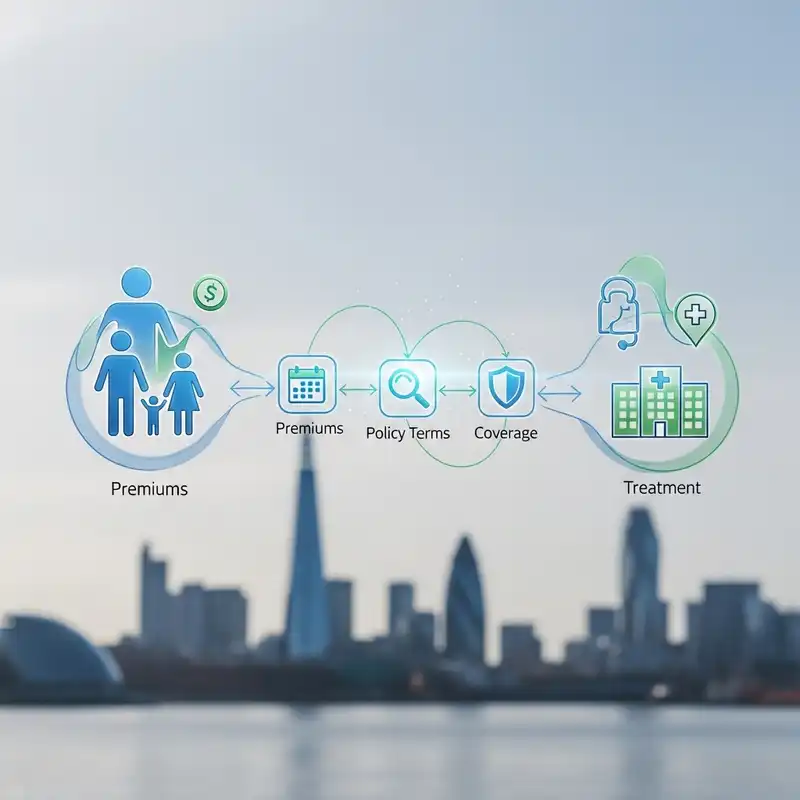
PMI is an insurance policy that you pay a monthly or annual premium for. In return, it covers the cost of eligible private medical treatment for acute conditions that arise after you take out the policy.

Think of it as a way to complement the fantastic emergency and chronic care services of the NHS. Its primary purpose is to allow you to bypass the long waiting lists for specialist consultations, diagnostic tests, and planned surgeries.

Key terms you'll encounter include:

  • Premium: The fixed amount you pay regularly (usually monthly) to keep your policy active.
  • Excess: A one-off contribution you make towards a claim, similar to car insurance. A higher excess typically means a lower premium.
  • Underwriting: How the insurer assesses your medical history to decide what they will and won't cover. The two main types are 'Moratorium' and 'Full Medical Underwriting'.
  • In-patient vs. Out-patient: 'In-patient' means you're admitted to a hospital bed overnight. 'Out-patient' means you attend a hospital or clinic for a consultation or test but don't stay overnight.
  • Hospital List: Your policy will include a list of private hospitals you can use. A more extensive list, including central London hospitals, usually costs more.
Get Tailored Quote

The Crucial Rule: What PMI Does NOT Cover

This is the single most important thing to understand about private health insurance in the UK. Getting this wrong is the source of most confusion.

Standard Private Medical Insurance is designed to treat new, acute conditions that begin after your policy starts.

An acute condition is one that is curable and short-lived, like a hernia, joint injury, or cataracts.

It is NOT designed for:

  • Pre-existing Conditions: Any illness, disease, or injury for which you have experienced symptoms, received medication, or sought advice before taking out the policy. Under a 'moratorium' policy, these may become eligible for cover, but only after you've been clear of any treatment, symptoms or advice for them for a continuous two-year period after your policy starts.
  • Chronic Conditions: These are conditions that are long-term and cannot be fully cured. They require ongoing management rather than a one-off curative treatment. This includes conditions like diabetes, asthma, hypertension, and Crohn's disease. The NHS remains the primary provider for managing these conditions.

Understanding this distinction is key. PMI is not a replacement for the NHS; it's a parallel system designed to give you speed, choice, and control for new, treatable health problems.

The PMI Solution: Fast-Tracking Your Physical and Mental Recovery

When you're facing a long wait, PMI offers two powerful antidotes to the anxiety and despair: speed and control. This dual benefit tackles both the physical problem and the mental toll it takes.

1. Unparalleled Speed of Access

The most significant and immediate benefit of PMI is bypassing the queue. The difference is dramatic and can be life-changing.

Healthcare StageTypical NHS Waiting Time (2025)Typical Private Sector Waiting Time
GP to Specialist Consultation4-12 weeks1-2 weeks
Specialist to Diagnostic Scans (MRI/CT)4-8 weeks2-7 days
Diagnosis to Surgical Treatment18-52+ weeks2-6 weeks
Total Wait (Illustrative)26 - 72+ weeks3 - 9 weeks

For someone like David, our plumber, this means the difference between being back on his feet in two months versus potentially waiting over a year in pain and unemployment. This speed isn't just convenient; it's a powerful intervention that stops the vicious cycle of mental and physical decline before it can take hold.

2. Choice, Control, and Comfort

The feeling of powerlessness is a major driver of wait-time anxiety. PMI hands that control back to you.

  • Choice of Specialist: You can research and choose the leading consultant for your specific condition, giving you confidence in your care.
  • Choice of Hospital: You can select a clean, modern private hospital that is convenient for you and your family, often with amenities like a private room, en-suite bathroom, and better food.
  • Choice of Time: You can schedule appointments and surgery at times that suit you, minimising disruption to your life and work.

This sense of agency is incredibly empowering and directly combats the anxiety and depression associated with being a passive number on a waiting list.

3. Integrated Mental Health Support: The Modern PMI Advantage

Insurers have recognised the undeniable link between physical and mental health. Modern PMI policies are no longer just about fixing broken bones; they are increasingly about supporting your overall wellbeing.

Most comprehensive policies now include robust mental health cover as standard or as a valuable add-on. This often includes:

  • Rapid Access to Therapy: Direct access to a network of qualified counsellors, psychotherapists, and psychiatrists without needing a long wait for an NHS referral. You can often get an appointment within days.
  • Digital Mental Health Platforms: Many insurers partner with apps like Headspace, Calm, or dedicated CBT (Cognitive Behavioural Therapy) platforms like SilverCloud. These provide 24/7 support right from your phone.
  • 24/7 Support Helplines: A dedicated phone line staffed by trained mental health professionals who can provide immediate support and guidance during a crisis.
  • Holistic Care: The true power lies in the integration. Your insurer can coordinate your physical recovery (e.g., post-surgery physiotherapy) with mental health support (e.g., therapy to manage the anxiety related to the injury), ensuring a truly holistic recovery.

This means a patient waiting for a hip replacement who is feeling depressed can get both their surgery and their therapy arranged quickly through one seamless service.

A Closer Look: What Does a Typical PMI Policy Cover?

PMI policies are not one-size-fits-all. They are designed to be flexible, allowing you to balance the level of cover with your budget. Policies generally fall into three tiers.

FeatureBasic CoverMid-Range Cover (Most Popular)Comprehensive Cover
In-patient & Day-patient Care✅ Fully Covered✅ Fully Covered✅ Fully Covered
Cancer Care✅ Full Cover (Standard)✅ Full Cover (Standard)✅ Enhanced Cover (e.g., access to more experimental drugs)
Out-patient Consultations & Tests❌ Not covered or capped at a low limit (e.g., £500)✅ Covered up to a set limit (e.g., £1,000-£1,500)✅ Fully Covered
Therapies (Physio, Osteo, etc.)❌ Not Covered✅ Covered (often as an add-on)✅ Included as standard
Mental Health Support❌ Not Covered or helpline only✅ Often an optional add-on✅ Included as standard with high limits
Dental & Optical❌ Not Covered❌ Not Covered✅ Often an optional add-on

The key is to tailor the policy to your needs. If your main concern is bypassing a long surgical wait, a basic in-patient-only policy could be very cost-effective. If you want peace of mind for diagnostics and holistic care, a mid-range or comprehensive plan is a better fit.

The Crucial Caveat: A Deeper Dive into PMI Exclusions

To make an informed decision, it's vital to be crystal clear on what PMI is not designed for. As we've mentioned, the golden rules are no cover for pre-existing or chronic conditions. Let's be unequivocally clear on this.

Chronic Conditions: A condition is considered chronic if it meets some of these criteria:

  • It needs long-term monitoring and management.
  • It has no known "cure."
  • It is likely to recur.
  • It requires ongoing medication or special diets.

Examples include: Diabetes, Asthma, Hypertension (High Blood Pressure), Arthritis, Crohn's Disease, and Multiple Sclerosis. The NHS provides excellent, ongoing management for these conditions, and this is where its strengths lie.

Pre-existing Conditions: This refers to any medical condition you had before your policy's start date. Under a 'moratorium' underwriting plan (the most common type), an insurer will typically not cover any condition you've had symptoms, medication, or advice for in the 5 years leading up to your policy start date. However, if you then go 2 continuous years after your policy starts without any symptoms, treatment, or advice for that condition, it may become eligible for cover.

Other Common Exclusions:

  • Emergencies: If you have a heart attack or are in a car accident, you still call 999 and go to an NHS A&E. Private hospitals are not equipped for emergency response.
  • Routine Pregnancy & Childbirth: Normal pregnancy is not covered, though some policies may cover complications.

  • Cosmetic Surgery: Procedures for purely aesthetic reasons are excluded. Surgery that is medically necessary (e.g., reconstructing a nose to aid breathing) may be covered.
  • Infertility Treatment (IVF)
  • Drug & Alcohol Rehabilitation

These exclusions are not there to catch you out; they are necessary to keep PMI focused on its core purpose of treating new, unexpected, and curable illnesses, which helps to keep premiums affordable for everyone.

How Much Does Private Health Insurance Cost in the UK?

This is the million-dollar question, but the answer is surprisingly affordable for many. The cost is highly personal and depends on several key factors:

  • Age: This is the most significant factor. Premiums increase as you get older.
  • Location: Living in or near major cities, especially London, means higher premiums due to the higher cost of private treatment there.
  • Level of Cover: A comprehensive plan will cost more than a basic in-patient plan.
  • Excess: Choosing a higher excess (e.g., £500 instead of £100) will lower your monthly premium.
  • Smoker Status: Non-smokers pay less.
  • Hospital List: A limited list of local hospitals is cheaper than a nationwide list including premium London centres.

Here are some illustrative monthly premium ranges for a non-smoker outside London in 2025.

Age ProfileBasic Plan (In-patient only, £500 excess)Comprehensive Plan (£250 excess)
30-year-old Individual£35 - £50£60 - £85
45-year-old Individual£55 - £75£90 - £130
55-year-old Couple£140 - £190£250 - £340
Family (2 adults, 2 kids)£130 - £180£240 - £320

Disclaimer: These are illustrative estimates only. Your actual quote will depend on your specific circumstances and the insurer you choose.

The key takeaway is that meaningful cover can often be secured for a manageable monthly cost – sometimes less than a daily cup of coffee and a sandwich.

Finding the Right Policy: Why Using an Expert Broker is Essential

The UK's PMI market is vast and complex, with dozens of insurers and hundreds of policy combinations. Trying to navigate this alone can be overwhelming, and it's easy to either buy too much cover or, worse, not enough. This is where an independent health insurance broker is invaluable.

A specialist broker works for you, not the insurance companies. Their role is to:

  1. Understand Your Needs: They take the time to understand your health concerns, priorities, and budget.
  2. Compare the Entire Market: They have access to policies and deals from all the UK's leading insurers, including Aviva, Bupa, AXA Health, and Vitality.
  3. Provide Expert, Unbiased Advice: They can demystify the jargon, explain the crucial differences between policies, and ensure you understand the exclusions.
  4. Save You Money: By tailoring a plan perfectly to your needs, they ensure you're not paying for unnecessary benefits. Their service is free to you, as they are paid a commission by the insurer you choose.

Here at WeCovr, we specialise in helping individuals, families, and businesses navigate this complex landscape. Our expert advisors live and breathe health insurance. We pride ourselves on finding policies that provide robust protection for both physical and mental wellbeing, ensuring our clients can face the future with confidence.

We also believe in supporting our clients' health journey holistically. That's why, in addition to finding you the perfect policy, all WeCovr customers receive complimentary access to CalorieHero, our proprietary AI-powered nutrition and calorie tracking app, to help you stay on top of your health goals long-term.

Taking Control of Your Health in Uncertain Times

The mental toll of NHS waiting lists is a real and growing crisis. The evidence is clear: long waits for physical treatment are causing widespread anxiety, depression, and a devastating loss of quality of life. For millions, this creates a feeling of being trapped in a system that is too overwhelmed to provide the timely care they need.

Private Medical Insurance offers a proven and effective path to regaining control. It provides rapid access to diagnosis and treatment, which not only resolves the physical issue but also provides immediate relief from the mental anguish of waiting. With modern policies now offering integrated mental health support, PMI has become a truly holistic solution for protecting both your body and your mind.

It is not a silver bullet, nor a replacement for the vital services of the NHS. But as a complementary system, it provides a level of speed, choice, and certainty that is simply unavailable elsewhere.

If you are one of the millions affected by long waits, or if you simply want to ensure you and your family are protected against them in the future, it's time to explore your options. Taking that first step to gather information is an empowering act in itself.

If you'd like to understand how a private medical insurance plan could be tailored for your specific needs and budget, the friendly team at WeCovr is here to provide free, no-obligation advice and a comparison of the whole market.


Related guides

Why private medical insurance and how does it work?

What is Private Medical Insurance?

Private medical insurance (PMI) is a type of health insurance that provides access to private healthcare services in the UK. It covers the cost of private medical treatment, allowing you to bypass NHS waiting lists and receive faster, more convenient care.

How does it work?

Private medical insurance works by paying for your private healthcare costs. When you need treatment, you can choose to go private and your insurance will cover the costs, subject to your policy terms and conditions. This can include:

• Private consultations with specialists
• Private hospital treatment and surgery
• Diagnostic tests and scans
• Physiotherapy and rehabilitation
• Mental health treatment

Your premium depends on factors like your age, health, occupation, and the level of cover you choose. Most policies offer different levels of cover, from basic to comprehensive, allowing you to tailor the policy to your needs and budget.

Questions to ask yourself regarding private medical insurance

Just ask yourself:
👉 Are you concerned about NHS waiting times for treatment?
👉 Would you prefer to choose your own consultant and hospital?
👉 Do you want faster access to diagnostic tests and scans?
👉 Would you like private hospital accommodation and better food?
👉 Do you want to avoid the stress of NHS waiting lists?

Many people don't realise that private medical insurance is more affordable than they think, especially when you consider the value of faster treatment and better facilities. A great insurance policy can provide peace of mind and ensure you receive the care you need when you need it.

Benefits offered by private medical insurance

Private medical insurance provides numerous benefits that can significantly improve your healthcare experience and outcomes:

Faster Access to Treatment
One of the biggest advantages is avoiding NHS waiting lists. While the NHS provides excellent care, waiting times can be lengthy. With private medical insurance, you can often receive treatment within days or weeks rather than months.

Choice of Consultant and Hospital
You can choose your preferred consultant and hospital, giving you more control over your healthcare journey. This is particularly important for complex treatments where you want a specific specialist.

Better Facilities and Accommodation
Private hospitals typically offer superior facilities, including private rooms, better food, and more comfortable surroundings. This can make your recovery more pleasant and potentially faster.

Advanced Treatments
Private medical insurance often covers treatments and medications not available on the NHS, giving you access to the latest medical advances and technologies.

Mental Health Support
Many policies include comprehensive mental health coverage, providing faster access to therapy and psychiatric care when needed.

Tax Benefits for Business Owners
If you're self-employed or a business owner, private medical insurance premiums can be tax-deductible, making it a cost-effective way to protect your health and your business.

Peace of Mind
Knowing you have access to private healthcare when you need it provides invaluable peace of mind, especially for those with ongoing health conditions or concerns about NHS capacity.

Private medical insurance is particularly valuable for those who want to take control of their healthcare journey and ensure they receive the best possible treatment when they need it most.

Important Fact!

There is no need to wait until the renewal of your current policy.
We can look at a more suitable option mid-term!

Why is it important to get private medical insurance early?

👉 Many people are very thankful that they had their private medical insurance cover in place before running into some serious health issues. Private medical insurance is as important as life insurance for protecting your family's finances.

👉 We insure our cars, houses, and even our phones! Yet our health is the most precious thing we have.

Easily one of the most important insurance purchases an individual or family can make in their lifetime, the decision to buy private medical insurance can be made much simpler with the help of FCA-authorised advisers. They are the specialists who do the searching and analysis helping people choose between various types of private medical insurance policies available in the market, including different levels of cover and policy types most suitable to the client's individual circumstances.

It certainly won't do any harm if you speak with one of our experienced insurance experts who are passionate about advising people on financial matters related to private medical insurance and are keen to provide you with a free consultation.

You can discuss with them in detail what affordable private medical insurance plan for the necessary peace of mind they would recommend! WeCovr works with some of the best advisers in the market.

By tapping the button below, you can book a free call with them in less than 30 seconds right now:

Our Group Is Proud To Have Issued 900,000+ Policies!

We've established collaboration agreements with leading insurance groups to create tailored coverage
Working with leading UK insurers
Allianz Logo
Ageas Logo
Covea Logo
AIG Logo
Zurich Logo
BUPA Logo
Aviva Logo
Axa Logo
Vitality Logo
Exeter Logo
WPA Logo
National Friendly Logo
General & Medical Logo
Legal & General Logo
ARAG Logo
Scottish Widows Logo
Metlife Logo
HSBC Logo
Guardian Logo
Royal London Logo
Cigna Logo
NIG Logo
CanadaLife Logo
TMHCC Logo

How It Works

1. Complete a brief form
Complete a brief form
2. Our experts analyse your information and find you best quotes
Experts discuss your quotes
3. Enjoy your protection!
Enjoy your protection

Any questions?

Life Insurance and Private Medical Insurance cover you for two different purposes, so you will need to assess your needs but may wish to consider holding the two policies. Private Medical Insurance covers you if you get sick or need treatment and want or need to go privately. Life Insurance covers you in the case of death, giving a payout to family/those left behind.

Health insurance covers conditions that develop after your policy starts. Pre-existing conditions are typically not covered, and insurers may exclude related issues. Some policies may cover symptoms of pre-existing conditions under specific circumstances. Always review your policy's exclusions. Coverage for pre-existing medical conditions may be available if you currently hold a medical insurance policy or are transitioning from a company scheme. However, if you have never had medical insurance before or if your policy is not active at the moment, pre-existing conditions will not be covered. This limitation exists because health insurance is primarily intended to protect against unexpected health issues. To simplify, it's akin to getting into a car accident and then trying to obtain insurance coverage afterward to repair the vehicle — insurance companies typically do not cover such claims. Nevertheless, there is an option to gain coverage for pre-existing conditions after a two-year waiting period, subject to specific rules and conditions.

If you prefer to get straight into treatment in the private sector without the long waiting times with the NHS, or you just prefer the private sector anyway, without having to pay it all yourself, then you would need to have Private Medical Insurance to cover it. Sometimes treatments and drugs that are not covered by the NHS can be covered by Private Medical Insurance.

It's free to use WeCovr to find health insurance - we never charge you for quotes. Health or private medical insurance is an investment that can pay for itself the first time you might need medical treatment.

It depends on your personal choice and preferences. If you are prepared to limit yourself to NHS-covered treatments only and can or want to endure long waiting times to get into treatment, then yes, NHS might work for you. Your cover there is free. If you don't want to be exposed to long waiting times or if your treatment is not covered by the NHS, then you would benefit from Private Medical Insurance.

Private Medical Insurance is an important financial product that insurance companies take a lot of care and diligence so speaking to real human beings ensures that they understand your requirements fully so that you can get the right cover.

All of our partners are carefully vetted and authorised by the FCA, which means they are held to the highest standards that the FCA expects from them and treat all customers fairly!

Our revenue comes from commissions paid by the insurance providers when a policy is taken out through us. Essentially, when you choose to secure a policy from one of the providers we work with, they compensate us for facilitating the transaction. It's important to note that this commission does not impact the premium you pay. We remain committed to providing transparent and unbiased quotes to help you find the best insurance options tailored to your needs.

The cost of private health insurance depends on several factors, including your age, location, smoking status, and the type of policy you choose. Your health insurance policy is tailored to your needs, and the cost can vary based on the level of cover you require, such as the amount of excess and specific treatment allowances.

Private health insurance covers you for conditions that arise after your policy begins. You pay a monthly fee and can make claims for private healthcare covered by your policy. One of the main benefits of private healthcare is quicker access to treatment compared to the NHS, along with access to new drugs or specialist treatments.

Most health insurance covers private hospital stays and may include outpatient treatments like scans, tests, or appointments. Policies vary in coverage, and exclusions often include emergency treatment, maternity care, cosmetic surgery, and ongoing conditions present before the policy started.

Unfortunately, you cannot pay extra to have a pre-existing condition covered as part of your health insurance policy. However, you have access to support from a nurse or digital GP. If you have questions about what is covered under your policy, please contact us for clarification.

Your health insurance policy begins once you've selected your policy and set up your payment. After setup, you'll receive your cover documents detailing what is and isn't covered. It's important to review these details carefully as policies differ.

An excess is the amount you contribute towards treatment when you make a claim. Choosing a higher excess can reduce your policy's monthly cost but requires a larger contribution when claiming. WeCovr's experts will offer you flexible excess options depending on your preferences.

To reduce health insurance costs, consider choosing a higher excess, which lowers the monthly premium. However, ensure the plan still meets your needs. Other factors affecting cost include lifestyle choices like smoking and potential savings for couples or family plans.

There is no age limit for taking out health insurance, but age influences the policy's cost. The benefits of health insurance are consistent regardless of age. If you're considering health insurance, you can get a quote from WeCovr's experts regardless of your age.

Let WeCovr's experts do the legwork for you and compare health insurance plans at no cost to you to find the best fit for your needs. Consider individual, couple, or family plans and review coverage details thoroughly before choosing. WeCovr provides transparent information on coverage options for easy comparison.

Yes, you can add your partner (if you live at the same address) or dependents to your policy at any time. The cost of couple's or family health insurance depends on factors like location, age, health, and chosen excess. Contact WeCovr or your insurer for assistance in adding someone to your policy.

While WeCovr's private health insurance plans are tailored for the UK, we offer global health insurance options for those living or working abroad. For holiday coverage, travel insurance is recommended.

Comprehensive cover provides extensive benefits, including full outpatient services such as consultations, diagnostic tests, physiotherapy, and mental health therapies. Our team at WeCovr can assist in understanding the various coverage levels available.

Private health insurance typically does not cover dental treatment. However, WeCovr's experts can guide you to dental insurance policies offered by our partner insurers. Reach out to us to explore these options.

Yes, private health insurance covers cancer treatment from diagnosis through treatment. At WeCovr, we can help you navigate the cancer cover options that suit your needs.

At WeCovr, you have flexibility in adjusting your cover. Speak to our experts within 21 days of receiving your paperwork or at policy renewal to make changes.

Accessing a private GP appointment is fast and convenient with WeCovr's services, available through your digital platform provided under your chosen insurance plan.

Yes, family members on the same policy can potentially have different levels of cover tailored to their individual needs.

WeCovr works with insurers offering a range of cover levels to accommodate different budgets and needs. Our experts can discuss these options with you.

Discovering healthcare facilities and specialists is easy with WeCovr's resources. Contact us for personalised assistance by tapping one of the buttons above or below and filling in a few details for personalised assistance.

Fee-assured consultants provides transparency and no hidden costs for clients.

WeCovr prioritises mental health support with comprehensive coverage and access to specialist advice and services.

Children up to a certain age can be included in your policy, and we offer discounts for family coverage.

Like most health insurance plans, premiums may increase annually due to factors such as age and medical cost inflation.

The cost of health insurance varies based on several factors. Connect with our experts by tapping a button below and get your own personalised quote.

Private health insurance offers quicker access to consultations, treatments, and personalised care compared to the NHS.

Yes, WeCovr's experts can guide you which health insurance plans include coverage for physiotherapy treatments.

Immediate access to certain services like our digital GP app is available upon enrolment.

You can obtain a range of suitable quotes easily by tapping one of the buttons above or below and filling in a few details for personalised assistance.

Health insurance covers new conditions that arise after the policy starts. Pre-existing conditions and certain exclusions may apply.

WeCovr's experts help you arrange health insurance that simplifies access to private healthcare services, including consultations and treatments.

Outpatient cover includes consultations, physiotherapy, and mental health therapies outside hospital admissions.

Yes, you can use your health insurance cover immediately. You have access to a nurse through your helpline and can consult with a GP using the digital GP app. If you need to make a claim right away, we may require a medical report from your GP. Health insurance is designed to cover new conditions that arise after the policy has started.

No, health insurance does not cover A&E (Accident and Emergency) visits. Private hospitals do not typically have the facilities for handling A&E cases. In case of an emergency, please dial 999 or use the NHS emergency services. However, if you require follow-up treatment after an emergency situation, your private medical insurance may be able to assist.

Yes, many insurers offer rewards in leisure, wellbeing, and health. Speak to WeCovr's experts or visit your insurer's website for more details on member rewards.

You may continue your cover or get another own personal policy. If you continue your cover, existing or ongoing medical conditions might be covered depending on the level of cover you choose. Contact our friendly experts to discuss your options and find the right option for you.

You can tap one of the buttons above or below and fill in a quick form to arrange a call with us to discuss your options.

Your cover may be similar but not identical. We will help you find the right level of cover that suits your needs, and ongoing medical conditions may be covered. Contact our friendly advisers to explore all available options.

No, the price won't be the same as before since employers often contribute to the cost of employee cover. Additionally, different cover levels and medical histories may affect the price. Contact WeCovr's experts for detailed information.

You have a few weeks or months from leaving your job to decide to continue with your insurer or change to another one. Your policy may start the day after you left your work policy, and our experts can guide you through other available options.

After leaving your job, contact WeCovr's experts with your leave date to discuss available options.

Yes, ongoing treatment may be covered on your new personal policy, although it could affect the price. Contact our experts for personalised advice on your options.

Details on paying excess fees will be provided when you contact your insurer for treatment authorisation.

No, there is no excess fee for utilising these services.

Excess adjustments can be made at specific intervals during your policy term.

No claims discounts can impact renewal costs based on claims history.

Pre-existing conditions typically aren't covered but can be discussed with our healthcare specialists.

This involves health-related questions before policy enrolment to determine coverage.

Moratorium underwriting simplifies enrolment but may require health disclosures during claims.

Claims may require additional information if under moratorium underwriting.

Pre-existing conditions refer to medical issues existing before policy inception. A pre-existing condition is anything you've previously had medical treatment for, such as diabetes, heart disease, or asthma. Most insurance providers consider any condition you've had symptoms or treatment for in the past five years as pre-existing. Our experts at WeCovr can help you understand how pre-existing conditions affect your policy options.

While some insurance providers automatically renew your private healthcare cover, it's beneficial to compare policies when yours is about to end. This ensures you're still getting the best deal for the coverage you need. Our experts at WeCovr can assist you in finding the right policy for you.

Typically, you must be over 18 to take out your own policy, but minors can usually be included in a family policy. There may also be an upper age limit for private health insurance, and premiums typically increase with age. Our experts at WeCovr can provide guidance on age-related policy aspects.

Paying for health insurance annually often results in savings compared to monthly payments. However, this depends on your insurance provider. For help determining the most cost-effective option, consider consulting our experts at WeCovr.

If your employer offers private health insurance as part of your benefits package, you likely don't need additional cover. However, there may be limits on the cover you receive, and it may not extend to your entire family. Remember, any insurance you get through work only covers you while you're employed there.

If you don't have pre-existing conditions, a medical exam is usually not required. You'll just need to complete a medical history form and select your level of cover. However, if you're older, have a pre-existing condition, or lead an unhealthy lifestyle, a medical exam may be necessary. Our experts at WeCovr can clarify the requirements of different policies.

Many private health insurance providers now offer GP services, either digitally or face-to-face. This means you can often get a private GP appointment quickly, sometimes even on the same day. Our experts at WeCovr can help you find policies that offer GP services.

With private health insurance, you can often secure a GP appointment much quicker than with traditional methods, sometimes even on the same day. Our experts at WeCovr can help you find policies that offer quick GP appointment services.

Inpatient care refers to any treatment requiring a stay in a hospital or clinic for at least one night. Outpatient care refers to treatments or tests that don't require hospital admission, such as minor diagnostic tests or physiotherapy sessions. Our experts at WeCovr can help you understand the different types of care and find a policy that suits your needs.

Private health insurance covers your medical treatment if you fall ill, while critical illness cover provides additional financial help if you develop one of the critical illnesses listed in the policy, such as covering loss of income if you're unable to work. For assistance in understanding the differences and finding the right coverage, consult our experts at WeCovr.

Health insurance policies are designed for cover in the UK. For cover abroad, consider travel insurance for short trips or international health insurance for longer stays or if you have a holiday home overseas. Our experts at WeCovr can guide you in finding the appropriate coverage for your travel needs.

If your employer provides health insurance, it's considered a 'benefit in kind' and is not tax deductible. Your employer should calculate the tax you owe for your health insurance premiums and deduct it from your pay. There are some exceptions for small companies. For more information on tax implications, consider reaching out to our experts at WeCovr.

When you purchase a policy, you choose how much excess you pay, which is your contribution to the cost of treatment if you make a claim. The higher your excess, the lower your premium is likely to be. Our experts at WeCovr can help you understand how excess works and choose the right level for you.

These are two methods of underwriting a health insurance policy, relating to how insurance providers consider your pre-existing medical conditions when you take out cover. For help understanding the differences and choosing the right option for you, consult our experts at WeCovr.

Some private health insurance providers offer a no-claims discount, similar to car insurance. Every year you don't make a claim gives you an extra year of no-claims discount, potentially reducing your premium when you renew. Our experts at WeCovr can help you find policies that offer no-claims discounts.

To find the best health insurance for you, compare various policies to find one that offers the features you need at a price you can afford. Consider your personal circumstances and what you want from your policy. Our experts at WeCovr can assist you in evaluating your options and selecting the right coverage for you.

If you need treatment, a GP referral is not always necessary. However, this depends on how you plan to pay for your treatment. Most hospitals will allow you to book appointments with a consultant without a GP referral if you are paying out-of-pocket. If you have private medical insurance, you'll need to check the terms of your policy to see whether your insurer requires you to consult with a GP first (most insurers do). Some policies offer a direct booking system without a referral for certain conditions, such as counseling for mental health issues.

Yes, you can obtain financing for a loan to cover the cost of surgery. Many private healthcare companies have partnerships with finance companies to allow you to spread the cost of private treatment over time. You could also explore getting an ordinary loan from your bank if this option proves to be more cost-effective for you.

WeCovr has conducted extensive research into the cost of private health insurance in the UK. Click the link to find out more detailed information.

Yes, you can continue to receive treatment through the NHS even if you have private health insurance and have received private treatment in the past. This could be for rehabilitation after private surgery or for treatment that is not covered by your health insurance policy. For example, some cosmetic surgeries may be available through the NHS but are generally not covered by private medical insurance.

This is a difficult question to answer definitively. There are certain services that cannot be obtained privately, such as emergency treatment at an Accident and Emergency (A&E) department. Many NHS consultants also practice privately, so you could potentially see the same consultant regardless of whether you choose private or public healthcare. However, private healthcare typically offers shorter waiting times, guaranteed private rooms, and more relaxed visiting hours. Additionally, you may have access to treatments and drugs that are not routinely available through the NHS.

Yes, you can self-refer to a private specialist without the need for a GP referral. However, the British Medical Association believes that in most cases, it is best practice to start with your GP, as they are familiar with your medical history.

Yes, if you have a health concern and pay for private tests and scans but cannot afford to have private surgery, you should be able to have your test results transferred to an NHS provider for treatment.


Learn more


...

Who Are WeCovr?

WeCovr is an insurance specialist for people valuing their peace of mind and a great service.

👍 WeCovr will help you get your private medical insurance, life insurance, critical illness insurance and others in no time thanks to our wonderful super-friendly experts ready to assist you every step of the way.

Just a quick and simple form and an easy conversation with one of our experts and your valuable insurance policy is in place for that needed peace of mind!

Important Information

Since 2011, WeCovr has helped thousands of individuals, families, and businesses protect what matters most. We make it easy to get quotes for life insurance, critical illness cover, private medical insurance, and a wide range of other insurance types. We also provide embedded insurance solutions tailored for business partners and platforms.

Political And Credit Risks Ltd is a registered company in England and Wales. Company Number: 07691072. Data Protection Register Number: ZA207579. Registered Office: 22-45 Old Castle Street, London, E1 7NY. WeCovr is a trading style of Political And Credit Risks Ltd. Political And Credit Risks Ltd is Authorised and Regulated by the Financial Conduct Authority and is on the Financial Services Register under number 735613.

About WeCovr

WeCovr is your trusted partner for comprehensive insurance solutions. We help families and individuals find the right protection for their needs.