Private Medical Insurance for Small Businesses Tax Deductions Explained

As an FCA-authorised broker that has helped arrange over 900,000 policies, WeCovr simplifies finding the right private medical insurance in the UK. This guide demystifies the tax implications for small businesses, helping you make an informed decision for your team and your bottom line.
A simple walk-through of what business owners can and cant claim
For any small business owner, your team is your greatest asset. Keeping them healthy, happy, and productive is paramount. This is where Private Medical Insurance (PMI) comes in, offering a powerful tool to support your employees' wellbeing and minimise disruption from illness.
But when it comes to the cost, a crucial question arises: "Is business health insurance tax-deductible?"
The short answer is yes, usually. The premiums your business pays for employee health insurance are generally considered an allowable business expense. However, the full story is more nuanced, with different rules for your employees and for you as a business owner.
This comprehensive guide will walk you through everything you need to know, in plain English, about the tax implications of private medical insurance for small businesses in the UK.
What Exactly is Business Private Medical Insurance?
Before we dive into the taxes, let's clarify what we're talking about. Business PMI, also known as a group health insurance scheme, is a policy taken out by a company to provide private healthcare access for its employees.
Its primary purpose is to cover the costs of diagnosis and treatment for acute conditions that arise after you take out the policy.
Crucial Point: Standard private medical insurance in the UK does not cover pre-existing conditions (illnesses you already had before the policy started) or chronic conditions (long-term illnesses like diabetes or asthma that require ongoing management rather than a cure). PMI is for new, curable health issues.
The key benefits for your business and team include:
- Reduced Sickness Absence: By bypassing long NHS waiting lists, employees get treated faster and can return to work sooner. With NHS waiting lists in England standing at 7.54 million cases in early 2024, this is a significant advantage.
- Enhanced Employee Morale: Offering health insurance shows you genuinely care for your team's wellbeing, boosting loyalty and job satisfaction.
- Talent Attraction & Retention: In a competitive job market, a strong benefits package can be the deciding factor for top talent choosing your company over a competitor.
- Access to Specialist Care: Employees get more choice over their specialist, hospital, and appointment times, offering convenience and peace of mind.
Now, let's connect these benefits to your balance sheet.
The Core Question: Is Business Health Insurance a Tax-Deductible Expense?
Yes, for a limited company, the cost of the PMI premiums you pay for your employees is considered a legitimate business operating cost, just like salaries or rent. This means you can deduct the full cost from your company's revenue before calculating your Corporation Tax bill.
| Expense Type | Tax Deductible? |
|---|---|
| Employee Salaries | Yes |
| Office Rent | Yes |
| Utility Bills | Yes |
| Employee PMI Premiums | Yes |
This deduction reduces your taxable profit, which in turn lowers the amount of Corporation Tax you have to pay. With the main rate of Corporation Tax at 25% (as of 2024/25), this can represent a significant saving.
However, there's a catch. While the business gets a tax break, the provision of health insurance is treated as a 'Benefit in Kind' for the employee. This has tax implications for them and National Insurance implications for you.
Let's break this down based on your business structure.
Tax Implications for Limited Companies
This is the most common structure for small businesses offering PMI. The process involves three key areas: Corporation Tax for the business, Income Tax for the employee, and National Insurance for the business.
1. Corporation Tax (The Business Saving)
As mentioned, the entire premium cost is an allowable business expense.
- Action: You include the total cost of the PMI policy in your annual accounts as a business expense.
- Result: Your taxable profit is reduced by the amount you spent on health insurance. Your Corporation Tax bill is subsequently lower.
2. Benefit in Kind (BIK) and Income Tax (The Employee's Cost)
Because the employee is receiving a non-cash benefit from their employment, HMRC treats it as additional income.
- Action: You, the employer, must report the value of the benefit (i.e., the cost of their insurance premium) to HMRC on a P11D form for each employee who receives it.
- Result: The employee will pay income tax on the value of the premium at their marginal rate (20%, 40%, or 45%). This is usually handled by HMRC adjusting their tax code, so the extra tax is collected automatically through their monthly payroll.
3. Class 1A National Insurance Contributions (NICs) (The Business's Additional Cost)
Because you are providing this benefit, the business must also pay Employer's National Insurance on the value of that benefit.
- Action: You must pay Class 1A NICs on the total value of the premiums for all employees.
- Result: The current rate for Class 1A NICs is 13.8% (2024/25). This is an additional cost to the business, on top of the premium itself.
A Worked Example: The True Cost for a Limited Company
Let's make this real. Imagine 'Innovate Ltd.', a small tech company with 5 employees. The company decides to offer a PMI policy to its team.
- Annual PMI premium per employee: £800
- Total annual premium cost for 5 employees: £4,000
- Corporation Tax rate: 25%
- Class 1A NICs rate: 13.8%
- Employee's income tax rate: 20% (Basic Rate)
Here’s how the numbers stack up for the business:
| Item | Calculation | Cost / (Saving) |
|---|---|---|
| Initial Premium Cost | 5 employees x £800 | £4,000 |
| Corporation Tax Saving | £4,000 x 25% | (£1,000) |
| Class 1A NICs Cost | £4,000 x 13.8% | £552 |
| Net Cost to Business | £4,000 - £1,000 + £552 | £3,552 |
Conclusion for the Business: The actual cost to Innovate Ltd. is £3,552 for the year, not the initial £4,000. This is a net saving of £448.
And for one of the employees:
| Item | Calculation | Cost |
|---|---|---|
| Value of Benefit | The premium cost | £800 |
| Income Tax Due | £800 x 20% | £160 per year |
Conclusion for the Employee: The employee gets access to private healthcare worth £800 for an annual tax cost of £160 (or about £13.33 per month deducted from their salary).
Tax Implications for Sole Traders and Partnerships
The rules are different if you are a sole trader or part of a partnership. The key distinction is how the cost of cover for the business owners themselves is treated.
| Person Covered | Premium Deductible? | Tax Implications |
|---|---|---|
| Employees | Yes | The premium is a business expense. However, it's a Benefit in Kind for the employee, who pays income tax on it. The business also pays Class 1A NICs. |
| Sole Trader (You) | No | You cannot claim the premium for your own private health cover as a business expense. It must be paid for out of your post-tax income. |
| Partners in a Partnership | No | Similar to a sole trader, the cost of PMI for the partners themselves is not an allowable business expense. It's considered a personal cost. |
Why the difference? HMRC's logic is that for a sole trader or partner, medical treatment is for the benefit of the individual person, not wholly and exclusively for the business. While your health is vital to your business, the benefit is not seen as purely a business one.
For your employees, however, the rules are the same as for a limited company. You can deduct their premiums as a business expense, but you must also report it as a Benefit in Kind on a P11D form and pay the associated Class 1A National Insurance.
Deeper Dive: Understanding the P11D Form
The P11D is a form employers must submit to HMRC for each employee who has received expenses or benefits in addition to their salary. It can seem daunting, but it's a standard part of UK payroll.
- What is it for? To tell HMRC the cash equivalent of any benefits and expenses you've provided.
- When is it due? You must submit all P11D forms to HMRC by 6th July following the tax year in which you provided the benefits.
- What happens next? HMRC uses this information to calculate the employee's tax and the employer's Class 1A NICs.
If you use payroll software, it can often help you manage and submit P11D information. If you're unsure, your accountant will be your best friend here.
Are There Any Tax-Exempt Health Benefits?
While PMI itself is a taxable benefit, HMRC does allow some specific health and welfare benefits to be provided tax-free. As a business owner, you can offer these without creating a P11D liability for you or a tax bill for your employee.
These include:
- Annual Health Screening: One health screening and one medical check-up per employee, per year. This is to proactively check for illness.
- Eye Tests: Required for employees who use display screen equipment (DSE).
- Welfare Counselling: Providing access to counselling services for employees (e.g., via an Employee Assistance Programme - EAP). This is exempt if it's available to all employees.
- Overseas Medical Treatment: If an employee falls ill or is injured while working abroad.
- Recommended Treatments: Medical treatment to help an employee return to work, up to a value of £500 per employee per year.
Many modern business health insurance plans now include access to services like an EAP or a 24/7 virtual GP service. Sometimes, the cost of these elements can be separated, potentially reducing the taxable BIK value. An expert broker, like WeCovr, can help you understand the structure of different policies.
ROI: Why Offer PMI Despite the Employee Tax?
Seeing that the employee has to pay tax on their benefit might make you pause. Is it still worth it? For most businesses, the answer is a resounding yes. The return on investment (ROI) goes far beyond the tax calculations.
Consider the cost of sickness absence. According to the Office for National Statistics (ONS), an estimated 185.6 million working days were lost because of sickness or injury in the UK in 2022, the highest level in a decade.
Let's revisit 'Innovate Ltd.':
- An employee needs a minor surgical procedure.
- The NHS waiting time is 9 months.
- The employee is in discomfort, less productive, and may need intermittent time off.
- With PMI, they are diagnosed and treated within 4-6 weeks.
The value of having that employee back at full capacity, contributing to projects and generating revenue, will almost certainly outweigh the £160 in tax they paid for the benefit. It's a classic case of a 'win-win'. You get a productive, valued employee, and they get fast, high-quality medical care.
Choosing the Right Private Health Cover for Your Business
Once you've decided to proceed, the next step is choosing a policy. The private medical insurance UK market is vast, with options to suit every budget and business size.
Key factors to consider:
- Level of Cover: Do you want a basic plan that covers essential diagnostics and surgery, or a comprehensive one that includes outpatient therapies and mental health support?
- Underwriting Type:
- Moratorium Underwriting: A popular choice for small groups. It automatically excludes conditions from the last 5 years. It's quick to set up as employees don't need to declare their full medical history.
- Full Medical Underwriting (FMU): Employees complete a detailed health questionnaire. The insurer then explicitly lists what is and isn't covered.
- Hospital List: Insurers offer different tiers of hospitals. A more restricted list can lower the premium.
- Excess: This is the amount an employee pays towards a claim. A higher excess (£250, £500) will reduce your premiums.
Navigating these choices can be complex. Using an independent PMI broker is highly recommended. An expert team can analyse your business needs, compare policies from leading providers, and find the most cost-effective solution.
How WeCovr Simplifies Your Health Insurance Journey
At WeCovr, we specialise in helping UK small businesses find the perfect health insurance solution. We believe in making the process clear, simple, and stress-free.
- Expert, Unbiased Advice: As an FCA-authorised broker, our loyalty is to you, our client, not to any single insurer. We provide impartial advice to help you make the best choice.
- Market Comparison: We do the hard work for you, comparing dozens of policies from the UK's best PMI providers to find the right fit for your budget and your team's needs.
- No Hidden Fees: Our service is completely free for you. We receive a commission from the insurer you choose, so you get expert guidance at no extra cost.
- High Customer Satisfaction: We are proud of our high customer satisfaction ratings, built on a foundation of trust and transparent communication.
- Holistic Wellness Support: When you arrange your PMI with us, your team also gets complimentary access to CalorieHero, our AI-powered calorie and nutrition tracking app, promoting everyday healthy habits.
- Exclusive Discounts: As a WeCovr client, you can also benefit from discounts on other types of business and personal insurance, helping you save money across the board.
Our goal is to be your long-term partner in employee wellbeing, not just a one-time comparison site.
Do I need to declare business PMI to HMRC?
Can I claim tax back on my personal health insurance as a director?
Is there a way to provide health insurance without it being a Benefit in Kind?
What is the difference between a P11D and a P11D(b)?
Disclaimer: The information in this article is for informational purposes only and does not constitute financial or tax advice. Tax laws are subject to change. We strongly recommend you consult with a qualified accountant to understand the specific tax implications for your business.
Ready to explore how private medical insurance can benefit your small business? Get a free, no-obligation quote from WeCovr today and let our experts guide you to the perfect plan.
Related guides

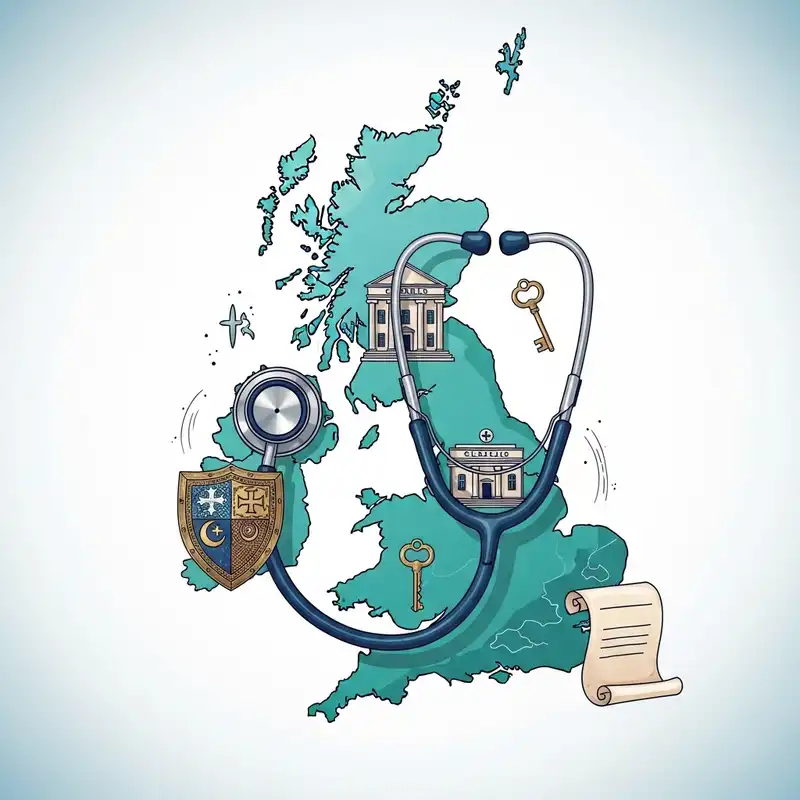



Why private medical insurance and how does it work?
What is Private Medical Insurance?
Private medical insurance (PMI) is a type of health insurance that provides access to private healthcare services in the UK. It covers the cost of private medical treatment, allowing you to bypass NHS waiting lists and receive faster, more convenient care.How does it work?
Private medical insurance works by paying for your private healthcare costs. When you need treatment, you can choose to go private and your insurance will cover the costs, subject to your policy terms and conditions. This can include:• Private consultations with specialists
• Private hospital treatment and surgery
• Diagnostic tests and scans
• Physiotherapy and rehabilitation
• Mental health treatment
Your premium depends on factors like your age, health, occupation, and the level of cover you choose. Most policies offer different levels of cover, from basic to comprehensive, allowing you to tailor the policy to your needs and budget.
Questions to ask yourself regarding private medical insurance
Just ask yourself:👉 Are you concerned about NHS waiting times for treatment?
👉 Would you prefer to choose your own consultant and hospital?
👉 Do you want faster access to diagnostic tests and scans?
👉 Would you like private hospital accommodation and better food?
👉 Do you want to avoid the stress of NHS waiting lists?
Many people don't realise that private medical insurance is more affordable than they think, especially when you consider the value of faster treatment and better facilities. A great insurance policy can provide peace of mind and ensure you receive the care you need when you need it.
Benefits offered by private medical insurance
Private medical insurance provides numerous benefits that can significantly improve your healthcare experience and outcomes:Faster Access to Treatment
One of the biggest advantages is avoiding NHS waiting lists. While the NHS provides excellent care, waiting times can be lengthy. With private medical insurance, you can often receive treatment within days or weeks rather than months.
Choice of Consultant and Hospital
You can choose your preferred consultant and hospital, giving you more control over your healthcare journey. This is particularly important for complex treatments where you want a specific specialist.
Better Facilities and Accommodation
Private hospitals typically offer superior facilities, including private rooms, better food, and more comfortable surroundings. This can make your recovery more pleasant and potentially faster.
Advanced Treatments
Private medical insurance often covers treatments and medications not available on the NHS, giving you access to the latest medical advances and technologies.
Mental Health Support
Many policies include comprehensive mental health coverage, providing faster access to therapy and psychiatric care when needed.
Tax Benefits for Business Owners
If you're self-employed or a business owner, private medical insurance premiums can be tax-deductible, making it a cost-effective way to protect your health and your business.
Peace of Mind
Knowing you have access to private healthcare when you need it provides invaluable peace of mind, especially for those with ongoing health conditions or concerns about NHS capacity.
Private medical insurance is particularly valuable for those who want to take control of their healthcare journey and ensure they receive the best possible treatment when they need it most.
Important Fact!
We can look at a more suitable option mid-term!
Why is it important to get private medical insurance early?
👉 Many people are very thankful that they had their private medical insurance cover in place before running into some serious health issues. Private medical insurance is as important as life insurance for protecting your family's finances.👉 We insure our cars, houses, and even our phones! Yet our health is the most precious thing we have.
Easily one of the most important insurance purchases an individual or family can make in their lifetime, the decision to buy private medical insurance can be made much simpler with the help of FCA-authorised advisers. They are the specialists who do the searching and analysis helping people choose between various types of private medical insurance policies available in the market, including different levels of cover and policy types most suitable to the client's individual circumstances.
It certainly won't do any harm if you speak with one of our experienced insurance experts who are passionate about advising people on financial matters related to private medical insurance and are keen to provide you with a free consultation.
You can discuss with them in detail what affordable private medical insurance plan for the necessary peace of mind they would recommend! WeCovr works with some of the best advisers in the market.
By tapping the button below, you can book a free call with them in less than 30 seconds right now:
Our Group Is Proud To Have Issued 900,000+ Policies!
We've established collaboration agreements with leading insurance groups to create tailored coverage











How It Works
1. Complete a brief form
2. Our experts analyse your information and find you best quotes

3. Enjoy your protection!

Any questions?
Learn more

Who Are WeCovr?
WeCovr is an insurance specialist for people valuing their peace of mind and a great service.👍 WeCovr will help you get your private medical insurance, life insurance, critical illness insurance and others in no time thanks to our wonderful super-friendly experts ready to assist you every step of the way.
Just a quick and simple form and an easy conversation with one of our experts and your valuable insurance policy is in place for that needed peace of mind!