Health Checks Offered by Insurers What to Expect and Who Qualifies

As an FCA-authorised broker that has helped arrange over 900,000 policies, WeCovr understands the nuances of private medical insurance in the UK. Many people wonder if their policy includes preventative care, like a yearly health MOT. This guide explores the health checks offered by insurers: what's included and who qualifies.
Types of medicals, testing frequency, and how to access your annual check-up
Private medical insurance (PMI) in the UK is primarily designed to cover the cost of treating acute conditions that arise after your policy begins. It's a common misconception that it works like a private GP service for any and all ailments. Crucially, standard UK PMI does not cover pre-existing conditions or the ongoing management of chronic illnesses like diabetes or high blood pressure.
However, a growing number of insurers are embracing preventative health. They offer health checks as a benefit on their more comprehensive policies. These checks are not for diagnosing and treating existing symptoms; they are proactive screenings designed to spot potential health risks early, giving you the power to make lifestyle changes or seek early advice.
Think of it as a smoke alarm for your health: its job is to alert you to a potential problem before it becomes a full-blown emergency.
Who Qualifies for an Insurer-Provided Health Check?
Access to a health check is not a given with every policy. It's typically a premium feature, designed to add value and encourage a proactive approach to wellbeing.
Here’s who generally qualifies:
- Policy Level: Entry-level or budget policies rarely include health checks. They are almost always reserved for mid-tier and comprehensive plans. The more you pay for your premium, the more likely you are to have access to a more thorough health assessment.
- Corporate Schemes: Many company health insurance schemes include health checks as a standard benefit for employees, as businesses recognise the value of a healthy, productive workforce.
- Length of Membership: Some insurers require you to be a member for a set period (e.g., one year) before you can access your first health check.
- Age: While some basic digital checks are available to all, more comprehensive screenings may be linked to age, often becoming more detailed for members over 40.
An expert PMI broker can be invaluable here. At WeCovr, we help you compare not just the core cover but also these valuable added benefits, ensuring you find a policy that matches your health priorities and budget, at no extra cost to you.
Typical Eligibility at a Glance
| Policy Tier | Likelihood of Health Check Benefit | Typical Type of Check |
|---|---|---|
| Budget / Entry-Level | Unlikely | Usually none. May have access to digital wellness tools. |
| Mid-Tier | Possible | Basic screening (e.g., online assessment, home blood test kit). |
| Comprehensive / Premium | Highly Likely | Intermediate to advanced in-person health assessment. |
| Corporate Scheme | Common | Varies from basic to comprehensive, depending on the employer's plan. |
A Breakdown of Common Health Checks and Tests Offered by UK Insurers
The term "health check" can mean anything from a five-minute online questionnaire to a two-hour examination with a doctor. The depth and breadth of the assessment depend entirely on your insurer and your level of cover.
Let's break down the different tiers of health checks you might encounter.
Tier 1: Basic Health Screening (Digital & At-Home)
This is the entry point for preventative health benefits. It’s convenient, quick, and designed to provide a foundational overview of your health risks.
What's typically included?
- Online Health Questionnaire: A detailed survey about your lifestyle (diet, exercise, smoking, alcohol), personal medical history, and family medical history. An algorithm then calculates your risk profile for certain conditions.
- At-Home Testing Kits: The insurer may post you a simple kit. This often involves a finger-prick blood sample.
- Key Measurements:
- Body Mass Index (BMI): Calculated from the height and weight you provide.
- Cholesterol: A basic check for total cholesterol. According to the NHS, over half of UK adults have raised cholesterol, a key risk factor for heart disease.
- Blood Pressure: Some providers may send a simple cuff, but more often they rely on self-reported numbers or guide you to a local pharmacy.
The result is usually a digital report with a "health score" and personalised recommendations for improving your diet, increasing activity, or reducing stress.
Tier 2: Intermediate Health Assessment (In-Person with a Nurse)
Found on more comprehensive policies, this check takes place at a partner clinic or hospital and is usually conducted by a qualified nurse. It provides a much more detailed picture of your health.
What's typically included?
- Everything in Tier 1, plus:
- In-Depth Consultation: A discussion about your lifestyle, concerns, and the results of your pre-assessment questionnaire.
- Physical Examination:
- Height, weight, and waist measurement for an accurate BMI and body composition analysis.
- Blood pressure reading taken by a professional.
- Pulse check.
- Comprehensive Blood Tests: A venous blood sample (taken from your arm) is analysed for a wider range of markers:
- Full Lipid Profile: Breaks down cholesterol into HDL ("good"), LDL ("bad"), and triglycerides.
- Liver Function: Checks for signs of liver inflammation or damage.
- Kidney Function: Assesses how well your kidneys are filtering waste.
- Blood Glucose (HbA1c): A key test to screen for pre-diabetes and type 2 diabetes. The ONS estimates that around 5-7% of the UK population lives with diabetes, with many more undiagnosed.
- Urine Analysis: Checks for protein, sugar, and signs of infection, which can indicate kidney problems or diabetes.
After the assessment, you receive a detailed report and often a follow-up call with the nurse to discuss the findings and create an action plan.
Tier 3: Advanced/Comprehensive Health Check (In-Person with a Doctor)
This is the gold standard of preventative health checks, typically reserved for top-tier private medical insurance UK policies or as a specific add-on. It includes a consultation with a doctor and may involve more advanced diagnostic tests.
What's typically included?
- Everything in Tiers 1 and 2, plus:
- Doctor Consultation: A longer, more in-depth consultation with a GP or specialist physician to discuss results and any specific concerns.
- Advanced Cardiovascular Assessment:
- Resting Electrocardiogram (ECG): Records the electrical activity of your heart to check for underlying rhythm problems.
- Cardiovascular Risk Score (e.g., QRISK3): A calculation that estimates your 10-year risk of having a heart attack or stroke.
- Specific Cancer Screenings (age and gender-dependent):
- PSA Test (Prostate-Specific Antigen): A blood test for men, usually over 50, which can indicate potential prostate issues, including cancer.
- Cervical Screening/HPV Advice: While the smear test itself is usually done via the NHS, the doctor will review your screening history and provide advice.
- Bowel Cancer Screening: May include a Faecal Immunochemical Test (FIT) kit to screen for hidden blood in the stool, an early sign of bowel cancer.
- Further Optional Tests: Depending on the provider, this level might also include:
- Lung Function Test (Spirometry): Especially for smokers or ex-smokers.
- Hearing Test.
- Thyroid Function Test.
- Exercise ECG (Treadmill Test): To see how your heart performs under stress.
This level of detail provides a comprehensive snapshot of your current health and future risks, guided by a medical doctor.
Comparison of Health Check Tiers
| Feature | Basic (Digital/Home) | Intermediate (Nurse-led) | Advanced (Doctor-led) |
|---|---|---|---|
| Location | Home | Partner Clinic / Hospital | Partner Clinic / Hospital |
| Conducted By | Self / Online | Nurse | Doctor & Nurse |
| Blood Test | Finger-prick (limited) | Venous sample (comprehensive) | Venous sample (extensive) |
| Key Tests | BMI, Basic Cholesterol | Full Lipid Profile, Liver/Kidney Function, Blood Glucose | Everything in Intermediate + Resting ECG, Cancer Markers (PSA), advanced risk scores |
| Consultation | Automated Report | In-person with Nurse | In-person with Doctor |
| Best For | A general wellness overview | A detailed health snapshot and risk screening | A deep-dive medical assessment with expert physician guidance |
How Often Can You Get a Health Check?
The frequency of your health check is determined by your insurer and policy terms.
- Annually: Most common for comprehensive policies. You can book one check every policy year.
- Biennially: Some insurers offer a check every two years.
- One-off: Occasionally, a health check might be offered as a joining incentive.
It's important to remember this is a scheduled benefit. You can't request a health check just because you feel unwell – that's what your NHS GP or a digital GP service is for. The health check is a planned, preventative appointment booked in advance.
How to Access Your Health Check Benefit: A Step-by-Step Guide
If you believe your policy includes a health check, accessing it is usually straightforward.
- Check Your Policy Documents: This is the first and most important step. Your policy booklet or member handbook will clearly state if a health check is included, what it covers, and how to book it. Look for sections titled "Wellness Benefits," "Health and Wellbeing," or "Health Assessments."
- Contact Your Insurer: Most insurers have a dedicated wellness or health screening phone line. You can also often start the process through your online member portal or app.
- Verification and Booking: The insurer will confirm your eligibility based on your policy level and membership history. They will then explain the options available to you (e.g., home kit, which clinics you can attend). They will either book the appointment for you or give you a number to call and an authorisation code.
- Complete the Pre-Assessment: You will almost always be asked to fill out an online health questionnaire before your appointment. Be honest and thorough – this information helps the clinician tailor the assessment to you.
- Attend Your Appointment / Use Your Kit: Follow the instructions provided, whether it's fasting before a blood test or attending the clinic at your scheduled time.
- Receive Your Results: Your results will be compiled into a personalised report. This is usually sent to you digitally via a secure portal and may be followed up with a phone call to discuss the findings.
What Happens After Your Health Check? Interpreting the Results
Receiving your health report can be empowering, but it can also be a source of anxiety. Here’s what to expect.
- A Clean Bill of Health: If all your results are within the normal range, the report will offer reassurance and general advice on how to maintain your healthy lifestyle.
- "Amber" Flags - Lifestyle Improvements Needed: The check might flag areas for improvement, such as slightly elevated cholesterol, a higher-than-ideal BMI, or borderline blood pressure. The report will provide specific, actionable advice on diet, exercise, and stress management to help you bring these numbers back into a healthy range.
- "Red" Flags - A Potential Medical Issue is Found: This is where the purpose of private health cover becomes critical to understand.
The Crucial Distinction: Acute vs. Chronic Conditions
If your health check uncovers a new medical condition, how your private health cover responds depends entirely on the nature of that condition.
-
If a new, treatable ACUTE condition is found: For example, the check leads to a colonoscopy that discovers a pre-cancerous polyp which can be removed. As this is a new, acute condition that requires short-term treatment to resolve, your PMI policy may cover the subsequent consultations, diagnostic tests, and treatment, subject to your policy's terms and limits.
-
If a CHRONIC condition is identified: For example, the blood tests reveal you have Type 2 Diabetes, or your blood pressure is consistently high (hypertension). These are long-term, chronic conditions that require ongoing management, not a short-term cure. Standard UK PMI will not cover the management of these conditions. The report will advise you to see your NHS GP, who will oversee your long-term care plan, including medication and regular monitoring. The condition would then be classed as "pre-existing" for the future of your policy.
This is the single most important concept to grasp. PMI is for the unexpected, treatable illnesses, not for managing long-term health issues.
The Added Value: Wellness Programmes and Digital Health Tools
Modern private medical insurance is about more than just paying for hospital beds. The best PMI providers offer a holistic ecosystem of tools to support your day-to-day health, which work hand-in-hand with health checks.
These often include:
- Digital GP Services: 24/7 access to a GP via phone or video call, perfect for quick advice and prescriptions.
- Mental Health Support: Access to counselling sessions, therapy apps like Headspace, and mental health helplines.
- Fitness and Nutrition Incentives: Many insurers (most famously Vitality) reward you for staying active, offering discounts on gym memberships, fitness trackers (like Apple Watch or Garmin), and healthy food.
- Expert Support Lines: Access to nurses and specialists for advice on topics like parenting, dealing with a new diagnosis, or managing stress.
At WeCovr, we enhance this value further. When you purchase a Private Medical or Life Insurance policy through us, you receive complimentary access to our proprietary AI-powered calorie and nutrition tracking app, CalorieHero. This tool can help you act on the dietary advice from your health check, making it easier to achieve your goals. Furthermore, our clients often benefit from discounts on other insurance products, like travel or home cover, creating even more value.
Is a Policy with a Health Check Worth It?
This is a personal decision. A policy that includes a comprehensive health check will naturally have a higher premium. You need to weigh the cost against the potential benefits.
Arguments in Favour:
- Peace of Mind: Knowing you've had a thorough check-up can be incredibly reassuring.
- Early Detection: It could genuinely save your life by catching a serious condition like cancer or heart disease at its earliest, most treatable stage.
- Motivation: A detailed report with concrete numbers can be the catalyst you need to make positive lifestyle changes.
- Convenience: Private health checks are often quicker to arrange and more detailed than the free NHS Health Check available to those aged 40-74 in England.
Potential Downsides:
- Cost: The higher premium may not be justifiable if you are young, in good health, and on a tight budget.
- Unnecessary Anxiety: A result that is slightly outside the "normal" range can cause worry, even if it's not clinically significant.
- Limited Action: If a chronic condition is found, the PMI policy won't cover its management, meaning you'll be referred back to the NHS anyway.
A specialist PMI broker can help you make an informed choice. The team at WeCovr can model different scenarios for you, showing the price difference between a basic policy and one with a comprehensive wellness package, allowing you to decide if the extra investment is right for you.
Do I need to declare the results of an insurer's health check on renewal?
Will my premium go up if the health check finds a problem?
Are health checks a standard part of all private medical insurance UK policies?
How do insurer health checks compare to the free NHS Health Check?
Ready to take a proactive approach to your health?
Understanding the intricate benefits of different health insurance policies can be complex. The expert, FCA-authorised advisors at WeCovr are here to help. We compare plans from across the market to find the right level of cover for your needs and budget, including those with valuable health check and wellness benefits.
Contact us today for a free, no-obligation quote and find the best PMI provider for you.
Related guides





Why private medical insurance and how does it work?
What is Private Medical Insurance?
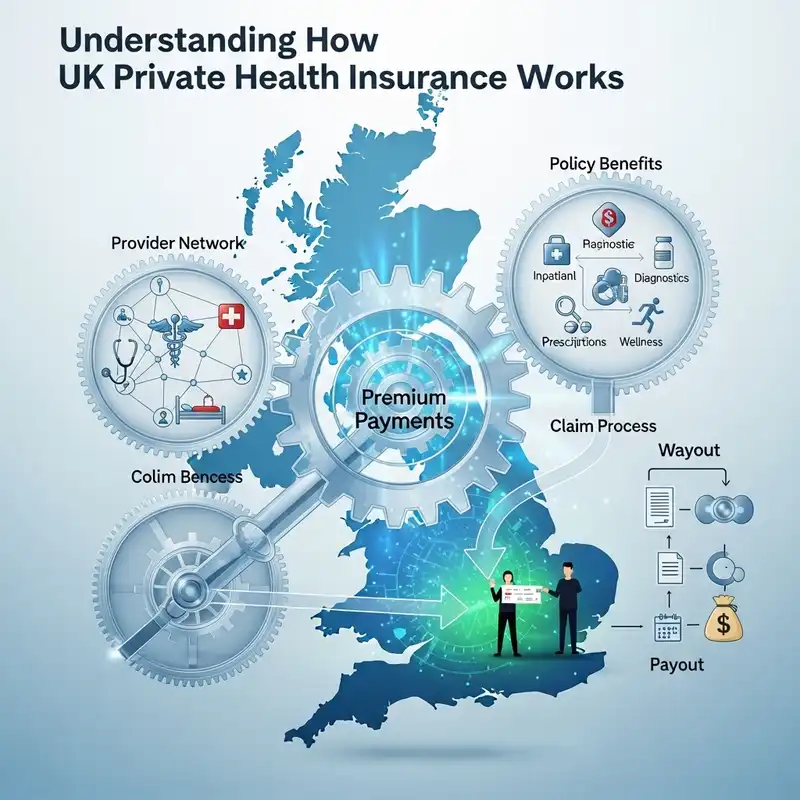
Private medical insurance (PMI) is a type of health insurance that provides access to private healthcare services in the UK. It covers the cost of private medical treatment, allowing you to bypass NHS waiting lists and receive faster, more convenient care.How does it work?
Private medical insurance works by paying for your private healthcare costs. When you need treatment, you can choose to go private and your insurance will cover the costs, subject to your policy terms and conditions. This can include:• Private consultations with specialists
• Private hospital treatment and surgery
• Diagnostic tests and scans
• Physiotherapy and rehabilitation
• Mental health treatment
Your premium depends on factors like your age, health, occupation, and the level of cover you choose. Most policies offer different levels of cover, from basic to comprehensive, allowing you to tailor the policy to your needs and budget.
Questions to ask yourself regarding private medical insurance
Just ask yourself:👉 Are you concerned about NHS waiting times for treatment?
👉 Would you prefer to choose your own consultant and hospital?
👉 Do you want faster access to diagnostic tests and scans?
👉 Would you like private hospital accommodation and better food?
👉 Do you want to avoid the stress of NHS waiting lists?
Many people don't realise that private medical insurance is more affordable than they think, especially when you consider the value of faster treatment and better facilities. A great insurance policy can provide peace of mind and ensure you receive the care you need when you need it.
Benefits offered by private medical insurance
Private medical insurance provides numerous benefits that can significantly improve your healthcare experience and outcomes:Faster Access to Treatment
One of the biggest advantages is avoiding NHS waiting lists. While the NHS provides excellent care, waiting times can be lengthy. With private medical insurance, you can often receive treatment within days or weeks rather than months.
Choice of Consultant and Hospital
You can choose your preferred consultant and hospital, giving you more control over your healthcare journey. This is particularly important for complex treatments where you want a specific specialist.
Better Facilities and Accommodation
Private hospitals typically offer superior facilities, including private rooms, better food, and more comfortable surroundings. This can make your recovery more pleasant and potentially faster.
Advanced Treatments
Private medical insurance often covers treatments and medications not available on the NHS, giving you access to the latest medical advances and technologies.
Mental Health Support
Many policies include comprehensive mental health coverage, providing faster access to therapy and psychiatric care when needed.
Tax Benefits for Business Owners
If you're self-employed or a business owner, private medical insurance premiums can be tax-deductible, making it a cost-effective way to protect your health and your business.
Peace of Mind
Knowing you have access to private healthcare when you need it provides invaluable peace of mind, especially for those with ongoing health conditions or concerns about NHS capacity.
Private medical insurance is particularly valuable for those who want to take control of their healthcare journey and ensure they receive the best possible treatment when they need it most.
Important Fact!
We can look at a more suitable option mid-term!
Why is it important to get private medical insurance early?
👉 Many people are very thankful that they had their private medical insurance cover in place before running into some serious health issues. Private medical insurance is as important as life insurance for protecting your family's finances.👉 We insure our cars, houses, and even our phones! Yet our health is the most precious thing we have.
Easily one of the most important insurance purchases an individual or family can make in their lifetime, the decision to buy private medical insurance can be made much simpler with the help of FCA-authorised advisers. They are the specialists who do the searching and analysis helping people choose between various types of private medical insurance policies available in the market, including different levels of cover and policy types most suitable to the client's individual circumstances.
It certainly won't do any harm if you speak with one of our experienced insurance experts who are passionate about advising people on financial matters related to private medical insurance and are keen to provide you with a free consultation.
You can discuss with them in detail what affordable private medical insurance plan for the necessary peace of mind they would recommend! WeCovr works with some of the best advisers in the market.
By tapping the button below, you can book a free call with them in less than 30 seconds right now:
Our Group Is Proud To Have Issued 900,000+ Policies!
We've established collaboration agreements with leading insurance groups to create tailored coverage




















How It Works
1. Complete a brief form

2. Our experts analyse your information and find you best quotes

3. Enjoy your protection!

Any questions?
Learn more

Who Are WeCovr?
WeCovr is an insurance specialist for people valuing their peace of mind and a great service.👍 WeCovr will help you get your private medical insurance, life insurance, critical illness insurance and others in no time thanks to our wonderful super-friendly experts ready to assist you every step of the way.
Just a quick and simple form and an easy conversation with one of our experts and your valuable insurance policy is in place for that needed peace of mind!