Dyspraxia Private Support Pathways

Navigating support for dyspraxia can be complex. WeCovr, an FCA-authorised broker that has helped arrange over 900,000 policies, clarifies the role of private medical insurance in the UK for accessing specialist care and the available private pathways for developmental coordination disorder (DCD).
WeCovr explains developmental coordination disorder and private support
Understanding dyspraxia, or Developmental Coordination Disorder (DCD), is the first step towards finding the right support. For many families and individuals in the UK, the journey from suspecting a difficulty to getting a diagnosis and therapy can feel daunting. Questions about NHS waiting lists, private options, and the role of insurance are common.
This comprehensive guide is designed to bring clarity. As experts in the UK health and insurance landscape, we will walk you through what DCD is, the support pathways available through both the NHS and the private sector, and, crucially, how private medical insurance fits into this picture. Our goal is to empower you with the knowledge to make informed decisions for yourself or your child.
What is Dyspraxia (Developmental Coordination Disorder)?
Dyspraxia is more than just being 'clumsy'. It's a common neurodevelopmental disorder that affects the way the brain plans and coordinates physical movements. Individuals with DCD find it hard to learn and perform motor skills, despite having normal intelligence and no other underlying neurological or medical conditions that could explain their difficulties.
Understanding the Basics of DCD
Think of your brain as a mission control centre. To tie your shoelaces, mission control needs to plan the sequence of movements, send the correct instructions to your fingers, and then adjust those instructions based on feedback from your eyes and hands.
For a person with dyspraxia, this internal messaging system has static on the line. The brain knows what it wants the body to do, but the messages get muddled during transmission or execution. This can affect everything from large movements (gross motor skills) like running and jumping to small, precise actions (fine motor skills) like writing or using cutlery.
Key facts about DCD:
- It is a lifelong condition, present from birth.
- It affects boys more commonly than girls.
- It can co-occur with other conditions like ADHD, dyslexia, and Autism Spectrum Disorder (ASD).
- It is not a sign of low intelligence; in fact, many people with DCD are highly intelligent and creative.
Signs and Symptoms of Dyspraxia Across Different Age Groups
The signs of DCD can change as a person gets older and faces different developmental challenges. While every individual is unique, here are some common indicators.
| Age Group | Common Signs and Symptoms |
|---|---|
| Early Years | Delayed motor milestones (e.g., crawling, walking). Difficulty with feeding, using a spoon, or drinking from a cup. Trouble with jigsaws and shape-sorters. |
| Primary School | Messy or slow handwriting. Difficulty with buttons, zips, and shoelaces. Clumsiness; frequently bumping into objects or people. Avoidance of PE and sports. |
| Teenagers | Poor organisational skills; forgetting homework or equipment. Challenges with practical subjects like science experiments or design technology. Difficulty learning to drive. |
| Adults | Inconsistent performance in tasks. Difficulty with household chores, cooking, or DIY. Poor time management and planning. Awkward posture and fatigue. |
How Common is Dyspraxia in the UK?
Dyspraxia is surprisingly common. According to the NHS, it is thought to affect up to 6% of the population to some extent. Research from sources like the Dyspraxia Foundation suggests that around 2% of people are severely affected.
To put that into perspective, in a typical UK primary school classroom of 30 children, it's likely that at least one or two pupils have DCD. Despite this, it remains a widely misunderstood and often hidden condition.
Navigating the NHS Pathway for Dyspraxia Support
For most families in the UK, the journey to a DCD diagnosis begins with the National Health Service (NHS). This pathway is comprehensive but can sometimes be slow.
The Standard Route: From GP to Specialist
-
Visit Your GP: The first port of call is usually your General Practitioner (GP). If you have concerns about your child, it's helpful to go prepared with a list of specific examples of their difficulties. The GP will listen to your concerns and may use a simple screening questionnaire.
-
Referral: If the GP agrees that an assessment is warranted, they will make a referral. For children, this is typically to a Community Paediatrician or the local Child and Adolescent Mental Health Services (CAMHS) or a dedicated neurodevelopmental pathway. For adults, the referral pathway can be less clear, but it may be to an occupational therapy service.
-
Multidisciplinary Assessment: A formal diagnosis of DCD is not made by one person alone. It usually involves a team of professionals, which may include:
- A Paediatrician or Doctor: To rule out any other medical causes.
- An Occupational Therapist (OT): To assess fine and gross motor skills, coordination, and the impact on daily life.
- A Physiotherapist: To assess posture, balance, and larger movements.
-
Diagnosis and Support Plan: Following the assessment, if the criteria for DCD are met, a diagnosis will be given. The team will then recommend a support plan, which might include blocks of occupational therapy, physiotherapy, or advice for home and school.
NHS Waiting Times and Regional Variations
While the NHS provides excellent care, it is under significant pressure. One of the main reasons families explore private options is the waiting time for NHS assessments and therapies.
According to NHS England data, waiting lists for community paediatrics and CAMHS can be lengthy. In 2024, reports indicated that hundreds of thousands of children were on waiting lists for community health services, with median waits often stretching for many months, and in some areas, over a year. These times vary dramatically depending on where you live in the UK. This long wait can be a period of great stress for families and can mean a child misses out on crucial early intervention.
The Critical Point: Dyspraxia and Private Medical Insurance (PMI)
This is a key area of confusion for many. People often wonder if a private medical insurance UK policy can help them bypass NHS waits for a dyspraxia diagnosis and therapy. The answer, in almost all standard cases, is no.
The "Chronic and Pre-existing" Exclusion Clause Explained
Private medical insurance (PMI) is designed for a specific purpose: to cover the cost of treating acute conditions that arise after you take out your policy.
To understand why this excludes dyspraxia, we need to define two key terms:
-
Acute Condition: A disease, illness, or injury that is likely to respond quickly to treatment and lead to a full recovery. Examples include a broken bone, appendicitis, or a cataract. PMI is designed for these short-term, unforeseen issues.
-
Chronic Condition: A condition that is long-lasting, has no known cure, and requires ongoing management. Examples include diabetes, asthma, and indeed, dyspraxia.
Dyspraxia (DCD) is a developmental disorder, meaning it is present from birth. In the language of insurance, this makes it a pre-existing condition. Furthermore, as it is a lifelong condition requiring management rather than a cure, it is also chronic.
Therefore, standard UK private medical insurance policies explicitly exclude cover for the investigation, diagnosis, and management of chronic and pre-existing conditions, which includes dyspraxia.
Are There Any Scenarios Where PMI Might Help?
While PMI will not pay for a DCD assessment or ongoing therapy like occupational therapy, it's not entirely without value for an individual with dyspraxia.
The key is to separate the chronic condition (dyspraxia) from any new, acute conditions that might arise.
Example: Amelia, 12, has dyspraxia. Her parents have a family private health cover policy. Amelia falls while playing and injures her knee, tearing a ligament.
- Her dyspraxia assessment and regular OT sessions are not covered by the PMI policy. Her parents fund this privately.
- However, the knee injury is a new, acute condition. The PMI policy can be used to see a private orthopaedic consultant quickly, get an MRI scan, and cover the costs of surgery and post-operative physiotherapy to repair the ligament.
This allows Amelia to get prompt treatment for her acute injury, helping her get back on her feet faster.
Some high-end corporate PMI schemes, arranged through an employer, may occasionally offer limited benefits for neurodiversity assessments. However, this is very rare and not a feature of standard individual or family policies. As an expert PMI broker, WeCovr can help you scrutinise policy documents to understand exactly what is and isn't included.
The Private Pathway: Accessing Diagnosis and Support Independently
Given the limitations of PMI and potential NHS waiting times, many people choose to fund diagnosis and support out-of-pocket. This route offers speed and choice but comes at a cost.
Finding a Private Specialist for Diagnosis
The professionals qualified to diagnose DCD are the same as in the NHS, but you access them directly. You can find independent practitioners through their professional bodies:
- Occupational Therapists: Search the register of the Royal College of Occupational Therapists (RCOT), specifically looking for those specialising in independent practice and paediatrics/neurodiversity.
- Paediatricians: You can seek a private referral to a consultant paediatrician specialising in neurodevelopment.
- Clinical Psychologists / Educational Psychologists: These professionals can also be involved, particularly if there are co-occurring learning or emotional concerns.
What to Expect from a Private Dyspraxia Assessment
A private assessment is typically very thorough. The process usually involves:
- Initial Consultation: A discussion about your concerns, developmental history, and the impact of the difficulties on daily life.
- Questionnaires: Standardised forms for parents and teachers (for a child) to fill in.
- Standardised Testing: The clinician will use a recognised assessment tool, such as the Movement ABC-2 (Movement Assessment Battery for Children, 2nd Edition). This involves a series of fun, game-like tasks that measure fine motor skills, aiming and catching, and balance.
- Clinical Observations: The therapist will observe posture, movement quality, and how the individual approaches tasks.
- Detailed Report: You will receive a comprehensive report that explains the assessment findings, confirms whether the criteria for DCD are met, and provides a list of detailed recommendations for home, school, or the workplace.
Estimated Costs of Private Dyspraxia Services in the UK
Funding this pathway requires careful financial planning. Costs vary based on the clinician's experience and your location (prices are often higher in London and the South East). The table below provides a guide to typical costs in 2025.
| Service | Estimated Private Cost (2025) | Notes |
|---|---|---|
| Initial Consultation | £150 - £300 | A one-off meeting with a paediatrician or lead therapist. |
| Full Diagnostic Assessment | £800 - £2,000+ | This is the most significant cost. It includes several hours of assessment time and the detailed report. |
| Occupational Therapy Session | £80 - £150 per hour | For ongoing therapy sessions following diagnosis. |
| Physiotherapy Session | £70 - £140 per hour | To work on specific gross motor skills or core stability. |
| Educational Psychologist Report | £1,000 - £2,500+ | This may be needed separately for exam access arrangements or an Education, Health and Care Plan (EHCP). |
Building a Support Network: Therapies and Strategies
A diagnosis is just the beginning. The goal is to build a toolkit of strategies and support to help the individual thrive.
Key Therapies for Managing Dyspraxia
-
Occupational Therapy (OT): This is often the cornerstone of DCD support. An OT doesn't just look at the movement but at the 'occupation' or task. They help break down activities like handwriting, getting dressed, or organising a school bag into manageable steps. They might recommend adapted equipment like pencil grips, sloped writing boards, or specialised cutlery.
-
Physiotherapy: A physiotherapist can work on improving gross motor skills. This could involve exercises to strengthen core stability, improve balance, and develop coordination for activities like running, jumping, and catching a ball.
-
Speech and Language Therapy: A significant number of children with DCD also have difficulties with speech articulation or organising their language. A speech and language therapist can help with these co-occurring challenges.
Practical Tips for Home, School, and Work
Small adjustments can make a big difference.
At Home:
- Break Down Tasks: Instead of "get ready for school," break it into a visual checklist: 1. Get dressed, 2. Eat breakfast, 3. Brush teeth, 4. Pack bag.
- Use Assistive Tech: Voice-to-text software on a phone or computer can be a huge help for those who struggle with writing. Timers and calendar apps can aid organisation.
- Preparation is Key: Lay out clothes and pack school bags the night before to reduce morning stress.
At School/University:
- Reasonable Adjustments: Under the Equality Act 2010, educational institutions must make reasonable adjustments. For DCD, this commonly includes:
- Being allowed to use a laptop in class and exams.
- Extra time in tests.
- Receiving copies of lesson notes in advance.
- Talk to the SENCO: The Special Educational Needs Coordinator (SENCO) is the key contact in a school for organising this support.
In the Workplace:
- Access to Work: This is a government scheme that can provide grants to cover the cost of practical support and equipment in the workplace. This could fund specialist software, coaching, or awareness training for colleagues.
- Reasonable Adjustments: Examples include providing written as well as verbal instructions, allowing for a quieter workspace, or using project management software to help with planning.
Holistic Wellbeing for Individuals with Dyspraxia
Managing DCD effectively also involves looking after overall health and wellbeing.
The Role of Diet and Nutrition
While no specific diet can 'cure' dyspraxia, good nutrition supports brain function and energy levels. Fatigue can make coordination difficulties much worse.
- Balanced Meals: Focus on a diet rich in whole foods, fruits, vegetables, and lean protein to maintain stable blood sugar and energy.
- Omega-3 Fatty Acids: Found in oily fish, walnuts, and flaxseeds, these are vital for brain health. Some studies have suggested a potential benefit for coordination, but more research is needed.
- Track Your Nutrition: Understanding your eating habits is the first step. WeCovr clients get complimentary access to our AI-powered calorie and nutrition tracking app, CalorieHero, to help them build healthier habits.
The Importance of Sleep
Sleep is when the brain processes and consolidates learning, including motor learning.
- Consistent Routine: Aim for a regular bedtime and wake-up time, even on weekends.
- Wind-Down Period: Avoid screens for an hour before bed. A warm bath or reading can help signal to the body that it's time to sleep.
- Comfortable Environment: Ensure the bedroom is dark, quiet, and a comfortable temperature.
Finding the Right Physical Activities
Many people with dyspraxia avoid sports due to bad experiences. The key is to find activities that build skills in a non-pressurised environment.
- Swimming: The water supports the body, making it easier to focus on coordinating limbs.
- Martial Arts: Disciplines like Judo, Karate, or Taekwondo focus on learning set patterns of movement, which can be very effective for motor planning.
- Climbing or Bouldering: This is excellent for building core strength, balance, and problem-solving skills.
- Yoga or Pilates: These practices improve balance, body awareness (proprioception), and core strength.
How WeCovr Can Help You Navigate Your Health Cover Options
While a standard PMI policy doesn't cover dyspraxia, it remains a vital safety net for your family's overall health. Unexpected illnesses and injuries can happen to anyone, and having the right private health cover ensures you can access expert care without long waits.
At WeCovr, we believe in clarity. Our job as an FCA-authorised PMI broker is to provide independent, expert advice.
- We help you compare policies from the UK's leading insurers to find the right fit for your needs and budget, at no extra cost to you.
- We take the time to explain the small print, so you know exactly what is and isn't covered before you need to use your policy.
- We have helped arrange over 900,000 policies of various kinds and enjoy high customer satisfaction ratings for our clear and helpful service.
- Clients who purchase PMI or life insurance through us also benefit from discounts on other types of cover, creating even more value.
Understanding the limits of PMI is as important as understanding its benefits. Let us help you find a policy that provides genuine peace of mind for the many other acute health challenges life may bring.
Do I need to declare dyspraxia when applying for private medical insurance?
Can private health cover help with my child's developmental assessment?
What's the difference between a chronic and an acute condition in PMI terms?
If PMI doesn't cover dyspraxia, is it still worth having?
Ready to explore your options for private health cover? The expert team at WeCovr is here to help. Get your free, no-obligation quote today and gain clarity and peace of mind for your future health.
Related guides

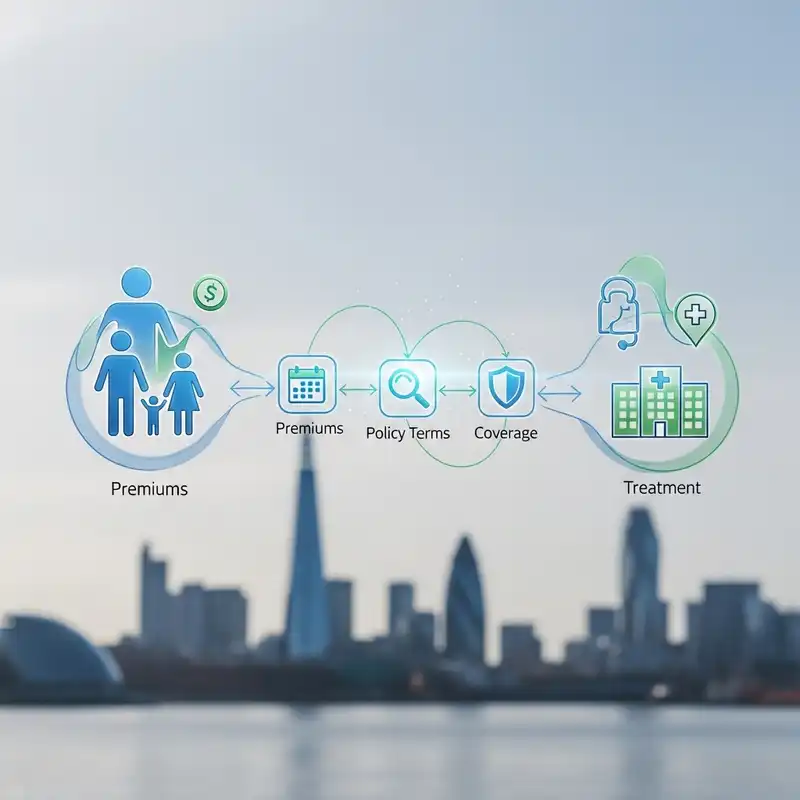




Why private medical insurance and how does it work?
What is Private Medical Insurance?
Private medical insurance (PMI) is a type of health insurance that provides access to private healthcare services in the UK. It covers the cost of private medical treatment, allowing you to bypass NHS waiting lists and receive faster, more convenient care.How does it work?
Private medical insurance works by paying for your private healthcare costs. When you need treatment, you can choose to go private and your insurance will cover the costs, subject to your policy terms and conditions. This can include:• Private consultations with specialists
• Private hospital treatment and surgery
• Diagnostic tests and scans
• Physiotherapy and rehabilitation
• Mental health treatment
Your premium depends on factors like your age, health, occupation, and the level of cover you choose. Most policies offer different levels of cover, from basic to comprehensive, allowing you to tailor the policy to your needs and budget.
Questions to ask yourself regarding private medical insurance
Just ask yourself:👉 Are you concerned about NHS waiting times for treatment?
👉 Would you prefer to choose your own consultant and hospital?
👉 Do you want faster access to diagnostic tests and scans?
👉 Would you like private hospital accommodation and better food?
👉 Do you want to avoid the stress of NHS waiting lists?
Many people don't realise that private medical insurance is more affordable than they think, especially when you consider the value of faster treatment and better facilities. A great insurance policy can provide peace of mind and ensure you receive the care you need when you need it.
Benefits offered by private medical insurance
Private medical insurance provides numerous benefits that can significantly improve your healthcare experience and outcomes:Faster Access to Treatment
One of the biggest advantages is avoiding NHS waiting lists. While the NHS provides excellent care, waiting times can be lengthy. With private medical insurance, you can often receive treatment within days or weeks rather than months.
Choice of Consultant and Hospital
You can choose your preferred consultant and hospital, giving you more control over your healthcare journey. This is particularly important for complex treatments where you want a specific specialist.
Better Facilities and Accommodation
Private hospitals typically offer superior facilities, including private rooms, better food, and more comfortable surroundings. This can make your recovery more pleasant and potentially faster.
Advanced Treatments
Private medical insurance often covers treatments and medications not available on the NHS, giving you access to the latest medical advances and technologies.
Mental Health Support
Many policies include comprehensive mental health coverage, providing faster access to therapy and psychiatric care when needed.
Tax Benefits for Business Owners
If you're self-employed or a business owner, private medical insurance premiums can be tax-deductible, making it a cost-effective way to protect your health and your business.
Peace of Mind
Knowing you have access to private healthcare when you need it provides invaluable peace of mind, especially for those with ongoing health conditions or concerns about NHS capacity.
Private medical insurance is particularly valuable for those who want to take control of their healthcare journey and ensure they receive the best possible treatment when they need it most.
Important Fact!
We can look at a more suitable option mid-term!
Why is it important to get private medical insurance early?
👉 Many people are very thankful that they had their private medical insurance cover in place before running into some serious health issues. Private medical insurance is as important as life insurance for protecting your family's finances.👉 We insure our cars, houses, and even our phones! Yet our health is the most precious thing we have.
Easily one of the most important insurance purchases an individual or family can make in their lifetime, the decision to buy private medical insurance can be made much simpler with the help of FCA-authorised advisers. They are the specialists who do the searching and analysis helping people choose between various types of private medical insurance policies available in the market, including different levels of cover and policy types most suitable to the client's individual circumstances.
It certainly won't do any harm if you speak with one of our experienced insurance experts who are passionate about advising people on financial matters related to private medical insurance and are keen to provide you with a free consultation.
You can discuss with them in detail what affordable private medical insurance plan for the necessary peace of mind they would recommend! WeCovr works with some of the best advisers in the market.
By tapping the button below, you can book a free call with them in less than 30 seconds right now:
Our Group Is Proud To Have Issued 900,000+ Policies!
We've established collaboration agreements with leading insurance groups to create tailored coverage
























How It Works
1. Complete a brief form

2. Our experts analyse your information and find you best quotes

3. Enjoy your protection!

Any questions?
Learn more

Who Are WeCovr?
WeCovr is an insurance specialist for people valuing their peace of mind and a great service.👍 WeCovr will help you get your private medical insurance, life insurance, critical illness insurance and others in no time thanks to our wonderful super-friendly experts ready to assist you every step of the way.
Just a quick and simple form and an easy conversation with one of our experts and your valuable insurance policy is in place for that needed peace of mind!