TL;DR
As an FCA-authorised expert with over 900,000 policies arranged, WeCovr helps families navigate the world of private medical insurance in the UK. This guide answers a crucial question for parents: can you add your children to your plan, what does it cover, and how much does it cost?
Key takeaways
- When you first take out the policy: This is the most common time. You simply include your children's details on the application.
- At your annual renewal: Your renewal date is the perfect opportunity to review your cover and add family members.
- Following a major life event: Insurers allow you to add a newborn or newly adopted child to your policy, typically within 30 to 90 days of the birth or adoption date. Acting within this window often means the child can be added without any new medical underwriting.
- Pre-existing Condition: Any illness, injury, or symptom you or your child had before the policy started. For example, if your child has diagnosed asthma, treatment for their asthma will not be covered.
- Chronic Condition: A long-term condition that cannot be cured, only managed. Examples include Type 1 diabetes, cystic fibrosis, or long-term eczema.
As an FCA-authorised expert with over 900,000 policies arranged, WeCovr helps families navigate the world of private medical insurance in the UK. This guide answers a crucial question for parents: can you add your children to your plan, what does it cover, and how much does it cost?
Rules and costs of adding children to your policy
Yes, you can almost always cover your children on your private medical insurance (PMI) plan. Insurers are very keen to help families get the peace of mind that comes with private health cover, and they make the process straightforward.
Rather than taking out individual policies for each family member, you can create a single ‘family policy’. This is not only more convenient to manage but is also significantly more cost-effective. Most providers in the UK offer special pricing for families, often including discounts for adding more than one child.
Adding your children means they get the same core benefits as you: faster access to specialists, choice over where they are treated, and access to advanced diagnostic scans and treatments. The cost of adding a child varies based on their age, the level of cover you choose, and your insurer, but it's often more affordable than many parents assume.
How Does Adding Children to a PMI Policy Work?
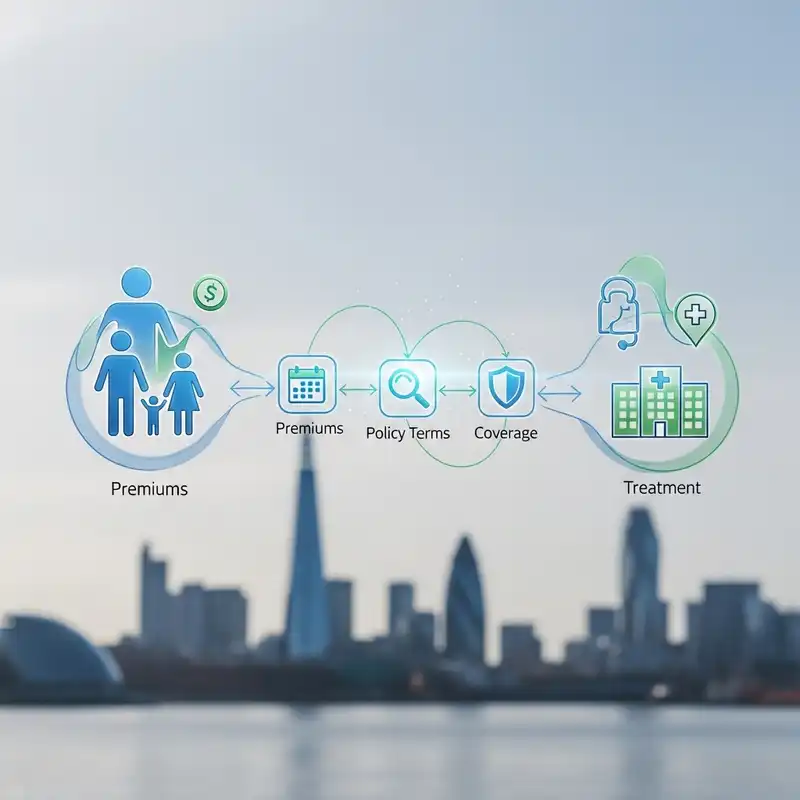
Adding a child to your policy is a simple administrative step. You can usually do this:
- When you first take out the policy: This is the most common time. You simply include your children's details on the application.
- At your annual renewal: Your renewal date is the perfect opportunity to review your cover and add family members.
- Following a major life event: Insurers allow you to add a newborn or newly adopted child to your policy, typically within 30 to 90 days of the birth or adoption date. Acting within this window often means the child can be added without any new medical underwriting.
You'll need to provide their full name and date of birth. The insurer will then adjust your policy and premium accordingly.
A Critical Note on Medical Conditions
It is vital to understand what private medical insurance is for. PMI is designed to cover acute conditions – illnesses or injuries that are new, unexpected, and likely to respond quickly to treatment.
Standard UK PMI policies do not cover pre-existing or chronic conditions.
- Pre-existing Condition: Any illness, injury, or symptom you or your child had before the policy started. For example, if your child has diagnosed asthma, treatment for their asthma will not be covered.
- Chronic Condition: A long-term condition that cannot be cured, only managed. Examples include Type 1 diabetes, cystic fibrosis, or long-term eczema.
This is the single most important rule in the UK health insurance market.
What Are the Benefits of a Family Health Insurance Plan?
Investing in a family health insurance plan brings invaluable benefits that go far beyond just finances. It’s about ensuring your child gets the best possible care, exactly when they need it.
- Rapid Access to Specialist Care: The NHS is a national treasure, but it faces significant pressure. According to NHS England data, the median waiting time for paediatric specialist referrals can stretch for months. PMI allows you to bypass these queues, meaning your child can see a consultant paediatrician in days or weeks, not months. This is crucial for early diagnosis and treatment.
- Choice and Comfort: When a child is unwell, comfort and a calm environment are paramount. PMI gives you:
- Choice of Specialist: You can choose the consultant you want to see.
- Choice of Hospital: Access to a network of clean, modern private hospitals.
- Private Room: Your child will almost certainly have their own private, en-suite room, creating a more peaceful space for recovery.
- Parental Accommodation: A huge benefit for parents. Most family-friendly policies include cover for one parent to stay overnight in the hospital with their child, ensuring they are never alone.
- Specialist Paediatric Facilities: Top private hospitals often have dedicated children's wards (paediatric wards) with nurses and doctors who specialise in caring for young patients.
- 24/7 Digital GP Services: Imagine your child wakes up with a high fever at 2 am. Instead of waiting for the morning or heading to A&E, you can use your policy's Digital GP service for an immediate video consultation. This is one of the most used and valued benefits for parents.
- Enhanced Mental Health Support: There is a growing crisis in children's mental health. ONS figures show that rates of probable mental disorders in young people remain high. PMI can provide swift access to Child and Adolescent Mental Health Services (CAMHS), including psychologists and therapists, avoiding long NHS waiting lists.
The Cost of Adding Children to Your PMI: A Detailed Breakdown
The price of your family policy is not fixed; it's tailored to your unique circumstances. Understanding the factors that influence your premium will help you find the right balance between comprehensive cover and an affordable price.
Key Factors Influencing Your Premium:
| Factor | How It Affects Your Premium | Expert Tip |
|---|---|---|
| Number of Children | The more children, the higher the total cost, but the per-child cost often decreases. | Many insurers like Aviva and Bupa offer discounts. Some may cover the 2nd or 3rd child for free. An expert PMI broker can find these deals for you. |
| Age of Children | Premiums are generally very low for young children and infants, increasing as they get older. | Adding a child when they are young locks in their cover before any major health issues can develop and become exclusions. |
| Level of Cover | A basic plan covering only in-patient treatment will be cheaper than a comprehensive plan that includes out-patient scans, diagnostics, and therapies. | Start by deciding what is essential (e.g., cancer cover, in-patient care) and what is a 'nice-to-have' (e.g., dental cover). |
| Policy Excess | This is the amount you agree to pay towards a claim. A higher excess (£500 or £1,000) will significantly reduce your monthly premium. | A £250 excess is a popular choice, balancing premium savings with a manageable upfront cost if you need to claim. |
| Hospital List | Insurers offer tiered hospital lists. A plan with a nationwide list including expensive central London hospitals will cost more than one with a limited local network. | Be realistic about where you would travel for treatment. A well-chosen regional list can save you a lot of money. |
| Underwriting Type | 'Moratorium' underwriting is simpler and often cheaper initially. 'Full Medical Underwriting' requires a health questionnaire but can provide more certainty. | Speak to an adviser at WeCovr to understand which underwriting method is best for your family's health history. |
Illustrative Monthly Premiums for a Family
These are example costs to demonstrate how premiums can vary. They are for illustrative purposes only and based on a non-smoking family with a £250 excess and a standard hospital list.
| Family Composition | Estimated Monthly Premium (Basic Plan) | Estimated Monthly Premium (Comprehensive Plan) |
|---|---|---|
| 2 Adults (35), 1 Child (5) | £95 - £130 | £160 - £220 |
| 2 Adults (40), 2 Children (8, 3) | £120 - £170 | £210 - £290 |
| 1 Adult (30), 1 Child (2) | £60 - £90 | £100 - £150 |
Disclaimer: Actual quotes will depend on your specific circumstances and the insurer chosen. These figures are for 2025 guidance.
Real-Life Example: The Taylor Family
Mark (38) and Sarah (36) have a six-year-old son, Leo. They are considering private medical insurance. Their main priority is ensuring that if Leo ever needed to see a specialist, he could do so quickly.
They spoke to WeCovr and compared policies. They chose a comprehensive plan with a £500 excess. Their monthly premium was £185.
Six months later, Leo developed a persistent and painful earache. Their NHS GP suspected an issue requiring an ENT (Ear, Nose, and Throat) specialist, with a potential 4-month wait.
Instead, they used their PMI. They got an open referral from their GP, called their insurer, and Leo saw a private paediatric ENT consultant within four days. He was diagnosed with 'glue ear' and had grommets fitted in a private hospital two weeks later. The entire process was smooth, stress-free, and Sarah was able to stay with Leo in his private room.
Comparing Policy Options: What to Look For in a Family Plan
Not all private health cover is created equal. When choosing a policy for your family, look beyond the headline price and examine the features that matter most for children.
Key Features for Family PMI Policies:
- Parental Accommodation: Check if this is included as standard. Is there a limit on the number of nights?
- Paediatric Specialists: Ensure the insurer's hospital list includes hospitals with strong paediatric departments and a wide range of children's specialists.
- Mental Health Cover: This is increasingly important. Check the financial limit for mental health treatment. Does it cover therapy and counselling sessions for children and adolescents?
- Digital GP: Is the service 24/7? Are the GPs trained to handle paediatric queries?
- Wellness Benefits: Look for added value. For instance, clients who purchase PMI through WeCovr receive complimentary access to CalorieHero, an AI-powered calorie and nutrition tracking app to help maintain a healthy family lifestyle. They may also receive discounts on other policies like life or home insurance.
- Dental and Optical Cover: This is rarely standard but can often be added for an extra premium. It can be cost-effective for covering routine check-ups and orthodontics.
Provider Feature Comparison for Families
| Feature | Bupa | AXA Health | Aviva | Vitality |
|---|---|---|---|---|
| Parental Accommodation | Yes, usually included | Yes, on most plans | Yes, comprehensive plans | Yes, included |
| Child-Specific Offers | Often have family discounts | Family discounts available | Can offer 'free cover' for subsequent children | Active Rewards programme can benefit the whole family |
| Mental Health Cover | Strong, extensive cover options | Good, with a focus on quick access to support | Comprehensive options available | Integrated approach linking physical and mental health |
| Digital GP Service | Babylon Digital GP | Doctor at Hand | Aviva Digital GP | Vitality GP |
Note: Specific features depend on the exact policy chosen. An expert broker can provide a detailed comparison.
Important Exclusions to Understand for Children's Health Cover
Managing your expectations is key to being happy with your policy. As well as the core rule about pre-existing and chronic conditions, you should be aware of other standard exclusions.
PMI will typically NOT cover:
- A&E / Emergency Treatment: If your child has a serious accident or a medical emergency, you must go to your nearest NHS A&E department. PMI does not cover emergency services.
- Routine Vaccinations & Check-ups: Standard immunisations and developmental checks remain with the NHS.
- Normal Pregnancy & Childbirth: While complications of pregnancy may be covered by some comprehensive plans, a normal, healthy pregnancy and delivery are not.
- Congenital Abnormalities: Conditions that are present from birth.
- Learning and Developmental Issues: Conditions like ADHD, dyslexia, or autism spectrum disorders are generally not covered for diagnosis or treatment.
- Cosmetic Surgery: Unless it is required for reconstructive purposes following an accident or eligible surgery.
Age Limits and Rules for Covering Children
Children can't stay on your family policy forever. It's important to know the rules to plan for the future.
- Age Limit: Most insurers will allow you to cover your children on your policy until they are 18 or 21. Some extend this to age 24 or 25 if the child is still in full-time education.
- What happens when they 'age out'? When they reach the age limit, they will need to take out their own individual policy. If they have been on your policy continuously, insurers often make this transition very easy, allowing them to start a new policy without any new medical underwriting. This is a significant benefit, as it means any conditions that developed while they were covered on your family plan will continue to be covered on their new individual plan.
- Adding Newborns: There is usually a specific window (e.g., 90 days) to add a newborn to your policy. If you add them within this time, they are often accepted without underwriting, which is a major advantage. Miss this window, and you may have to complete a medical application for them.
Practical Health & Wellness Tips for Your Family
While having PMI provides a safety net, prevention is always better than cure. Fostering a healthy lifestyle can reduce the need to claim and build a foundation of wellbeing for your children.
- A Balanced Diet: Encourage a diet rich in fruits, vegetables, lean proteins, and whole grains. A healthy diet is the cornerstone of a strong immune system. Use tools like the WeCovr-provided CalorieHero app to make tracking nutrition fun and educational for the whole family.
- Prioritise Sleep: Children need more sleep than adults. The NHS recommends 9-12 hours for school-age children and 8-10 hours for teenagers. Good sleep is vital for physical growth, mental health, and cognitive function.
- Stay Active: Aim for at least 60 minutes of moderate to vigorous physical activity every day. This doesn't have to be organised sport; family walks, bike rides, or even just playing in the park all count.
- Talk About Mental Health: Create an open environment where your children feel comfortable talking about their feelings. Normalise conversations about stress, anxiety, and sadness. Early intervention is key, and knowing you have PMI to access professional help if needed can be a great comfort.
Frequently Asked Questions (FAQs)
Do I need to declare my child's pre-existing conditions when I add them to my policy?
Can I add an adopted child or stepchild to my private health insurance?
Is it cheaper to get a family policy or separate policies for each person?
What happens if my child needs emergency medical care?
Take the Next Step with Confidence
Choosing the right private medical insurance for your family is one of the most important decisions you can make for their health and your peace of mind. The UK market offers a wide range of choices, and navigating them can feel complex.
At WeCovr, our expert, experienced advisers are here to help. We do the hard work for you, comparing policies from all the leading UK providers to find the perfect cover for your family's needs and budget. Our advice is completely free, and we are committed to finding you a policy you can trust.
Contact WeCovr today for a free, no-obligation quote and give your family the gift of fast, high-quality healthcare.
Sources
- NHS England: Waiting times and referral-to-treatment statistics.
- Office for National Statistics (ONS): Health, mortality, and workforce data.
- NICE: Clinical guidance and technology appraisals.
- Care Quality Commission (CQC): Provider quality and inspection reports.
- UK Health Security Agency (UKHSA): Public health surveillance reports.
- Association of British Insurers (ABI): Health and protection market publications.